

Flatbread Pinwheels

Flatbread pinwheels start with a thin, oven-baked sheet of grated potato and zucchini. Spread it with vegan cream cheese, add sweet caramelized onions, sun-dried tomatoes and peppery arugula, then roll it into savory spirals.
The base needs no yeast or kneading, and the filling goes on after baking. Serve these vegan pinwheels as an appetizer or a light lunch with roasted tomato and red pepper soup.
Table of Contents
Why It Works
- Vegetables form the base: Grated potato and zucchini bake into a single sheet held together with a simple flour batter.
- A creamy layer holds the filling: Vegan cream cheese helps the finely chopped toppings stay in place as you roll.
- Sweet, tangy and fresh: Caramelized onions balance the sun-dried tomatoes, greens and light drizzle of balsamic glaze.
How to Make Flatbread Pinwheels
The full measurements and baking directions are in the recipe card below.


Tips for Rolling and Slicing
- Spread the base evenly. A thick center can stay soft while thin edges dry out. Press the mixture into a continuous sheet, filling any gaps before baking.
- Keep it flexible. Look for a cooked, set center and golden edges. Baking until the whole sheet is crisp makes it harder to roll without cracking.
- Cool before filling. Hot flatbread can melt the cream cheese and wilt the arugula. Let the heat escape before adding the toppings.
- Keep the filling fairly dry. Drain oil-packed tomatoes and cool the onions. Dry the washed greens well and use a light drizzle of glaze.
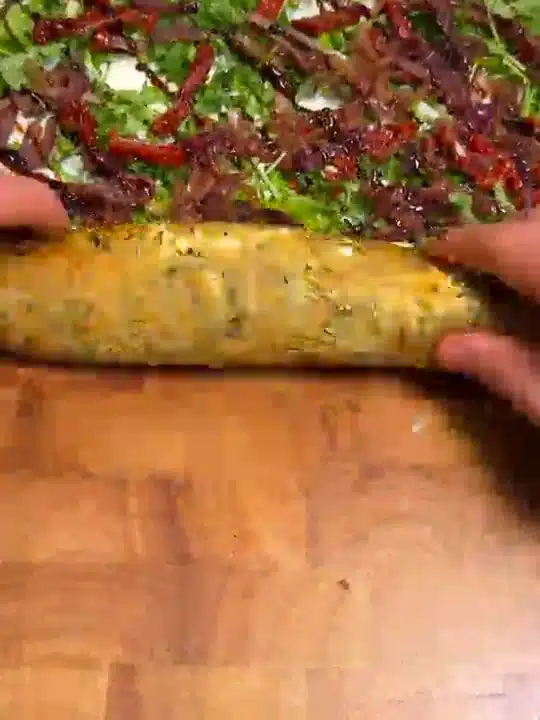
- Roll without squeezing. Spread the filling evenly, leave a small border at the far edge and use the parchment to guide the roll. Rest it seam-side down before slicing with a sharp knife.
Swaps and Variations
- Greens: Swap arugula for tender baby spinach, chopped if the leaves are large.
- Herbs: Stir chopped basil, chives or dill into the cream cheese. A pinch of chili flakes adds gentle heat.
- Other fillings: Try finely chopped olives or drained roasted peppers in place of some sun-dried tomatoes. Keep the total filling modest so the roll closes neatly.
- Gluten-free flour: A 1:1 all-purpose blend with a binder is a more suitable starting point than almond flour or rice flour alone. This variation has not been tested here, so the texture and flexibility may differ.
Serving Ideas
Arrange the pinwheels cut-side up on a platter with cucumber, bell pepper strips and a small bowl of creamy garlic dip. Add crispy fried olives for a warm, crunchy appetizer alongside them.
For lunch, serve larger slices with soup or a green salad. The flatbread is best enjoyed shortly after filling, while the greens are fresh and the base still has some bite.
Frequently Asked Questions
Can I prepare these 24 hours ahead?
For the best texture, bake the base and prepare the filling separately, then refrigerate them in covered containers. Assemble closer to serving. A fully assembled roll can be refrigerated for a few hours, but leaving it filled overnight softens the base and greens.
Why is my flatbread breaking when I roll it?
It may be too thin at the edges or overbaked. Bake only until the center is cooked and the sheet holds together, keeping it flexible. Loosen it gently from the parchment and roll with light, even pressure. If it is already brittle, serve it as topped flatbread pieces instead.
How do I stop the pinwheels from getting soggy?
Cook the base through, let it cool before spreading the cream cheese and keep the filling dry. Drain the tomatoes, dry the greens and avoid excess balsamic glaze. Slice close to serving.
Should I boil the potatoes first?
No. Use raw grated potatoes for this recipe. They cook in the thin flatbread layer in the oven; mashed or boiled potatoes would change the batter.
Can I use a tortilla or lavash instead?
Yes, for a quicker variation, use a soft ready-made wrap and add the same filling without baking the potato-and-zucchini base. Choose a vegan wrap that bends easily and spread the filling thinly.
Can I make these gluten-free?
The original recipe uses all-purpose wheat flour. You can experiment with a 1:1 gluten-free all-purpose blend that contains a binder, but it has not been tested here. Almond flour or rice flour alone is not a reliable direct substitute for a rollable sheet.
Does the cooking time include caramelizing the onions?
No. The recipe uses prepared caramelized onions. If you are making them from scratch, allow additional time and cool them before adding them to the flatbread.
Storage and Making Ahead
Refrigerate leftover pinwheels promptly in an airtight container and use within 2 days. The base and arugula soften as they sit, so freshly assembled pinwheels have the best texture. Keep chilled until serving rather than leaving the cream-cheese filling out for extended periods.
For advance preparation, store the cooled base separately from the fillings and assemble on the day you plan to serve. Freezing the finished pinwheels is less reliable because the greens wilt and vegan cream cheese can separate when thawed.
More Recipes to Try
- Baked Vegetable Flatbread
- Potato Flatbread with Herbs
- Creamy Garlic Dip
- Crispy Fried Olives
- Roasted Tomato and Red Pepper Soup

Flatbread Pinwheels
Ingredients
Equipment
Method
- Preheat: Preheat the oven to 400°F (200°C). Line a large baking sheet with parchment paper.
- Grate: Grate the potatoes and zucchini using a box grater. If liquid collects in the bowl, pour off the excess before mixing.
- Mix: Mix the flour, water, salt and pepper in a large bowl. Add the grated vegetables and stir until evenly coated in a cohesive, spreadable mixture.
- Spread: Press the mixture into an even, thin rectangle on the lined baking sheet. Close any gaps and keep the center as thin as the edges. Brush with the olive oil, if using.
- Bake: Bake for 25 to 30 minutes, until the edges are golden and the center is cooked and set. The sheet should hold together but still bend; avoid baking it dry and brittle.
- Cool and spread: Let the flatbread cool until no longer hot, keeping it on the parchment. Gently loosen it from the paper, then spread with the vegan cream cheese.
- Fill: Distribute the arugula, cooled caramelized onions and finely chopped sun-dried tomatoes evenly over the cream cheese. Leave a small border at the far edge and add a light drizzle of balsamic glaze.
- Roll: Starting at a short edge, roll the flatbread into a snug log. Use the parchment to lift and guide it, peeling the paper away as you roll.
- Slice and serve: Place seam-side down and use a sharp knife to cut into 1 to 2 inch (2.5 to 5 cm) pinwheels. Serve soon after assembling for the best texture.
Nutrition
Notes
Tried this recipe?
Let us know how it was!THE DR. VEGAN COOKBOOK COLLECTION
Your next favourite dinner is in here
Explore seven digital cookbooks with 200+ plant-based recipes, from quick dinners to comfort food. The link opens the official Dr. Vegan cookbook store.
Bom dia! Gostei de suas receitas. Gratidão. Abraço desde Portugal, Porto e um abençoado Natal.
looks delicious. want to try this. all your recipes are great.
Thank you, Roshila! Hope you enjoy the pinwheels when you try them 😊
Muito obrigado, Jorge! Um abraço para o Porto. Fico feliz que goste das receitas😊
Das sieht super lecker aus! Kann man das auch 24h vorher zubereiten und wird dann alles zu weich?!
Ich freue mich über Erfahrungen!
Viele Grüße
Hallo Julia! Nach 24 Stunden mit Füllung wird das Fladenbrot etwas weicher, besonders durch den Rucola und die Creme. Ich würde den Boden und die Füllung getrennt vorbereiten, gekühlt lagern und möglichst erst näher am Servieren füllen und rollen😊
1
1
1
1
I sub goat cheese i/o cream cheese. A glass of red wine, and dinner is served! Absolutely delicious!
So glad you enjoyed the pinwheels! Thanks for sharing 😊