

Roasted Tomato and Red Pepper Soup

This roasted tomato and red pepper soup gets its flavor from a tray of ripe tomatoes, sweet red peppers, onions and whole heads of garlic. Roast them until tender and browned at the edges, blend with vegetable broth, then stir in oat cream for a smooth, creamy soup without dairy.
The oven does most of the work in this vegan tomato and red pepper soup. Start with less broth so the soup stays rich, and add a little more only if it needs thinning. Fresh basil is optional, but a few leaves in the blender or on top give the roasted vegetables a fresh finish.
Table of Contents
Why This Soup Works
- Roasting builds flavor: Tomatoes, peppers and onions soften and brown before any broth is added, so their flavor stays at the center of the soup.
- Whole heads of garlic turn mellow: Roasting softens the cloves so they blend into the soup without the sharpness of raw garlic.
- Creaminess without dairy: Oat cooking cream gives the soup a smooth finish while keeping it vegan.
- You control the thickness: Starting with the smaller amount of broth helps avoid the watery soup a reader mentioned in the comments.
How To Make Roasted Tomato and Red Pepper Soup
Here is the quick flow: roast, blend, warm and serve. Full measurements and instructions are in the recipe card below.
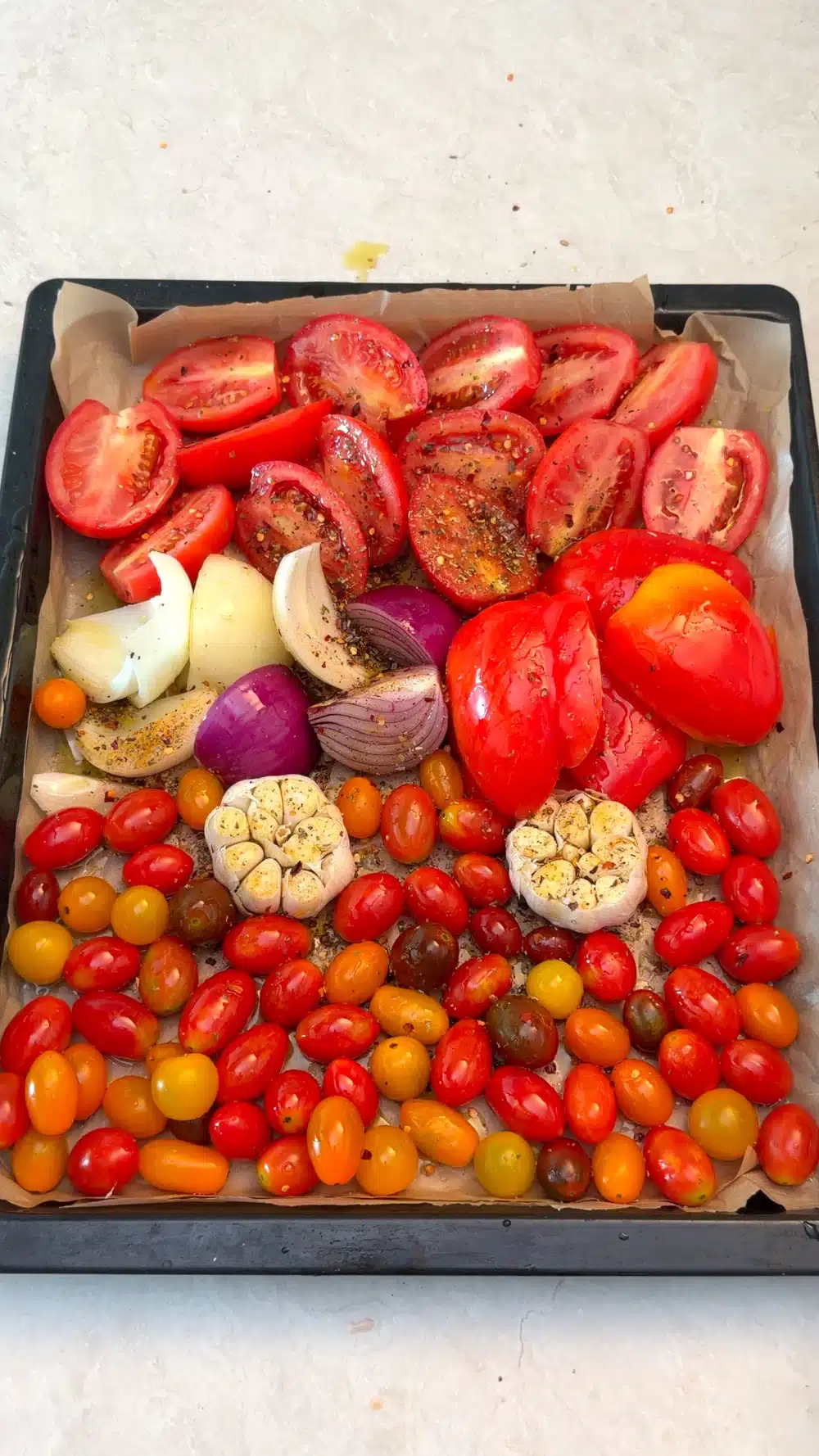
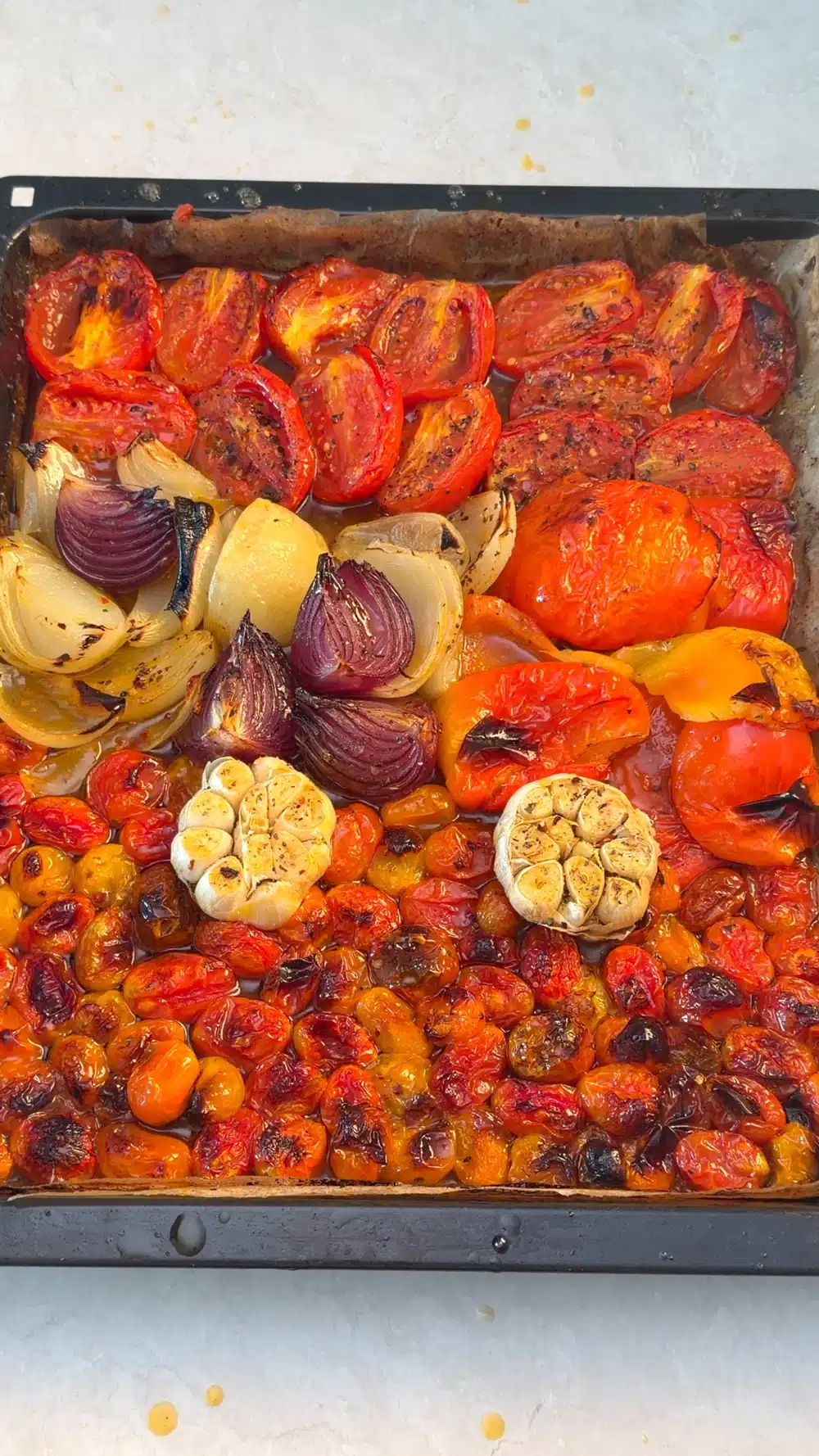
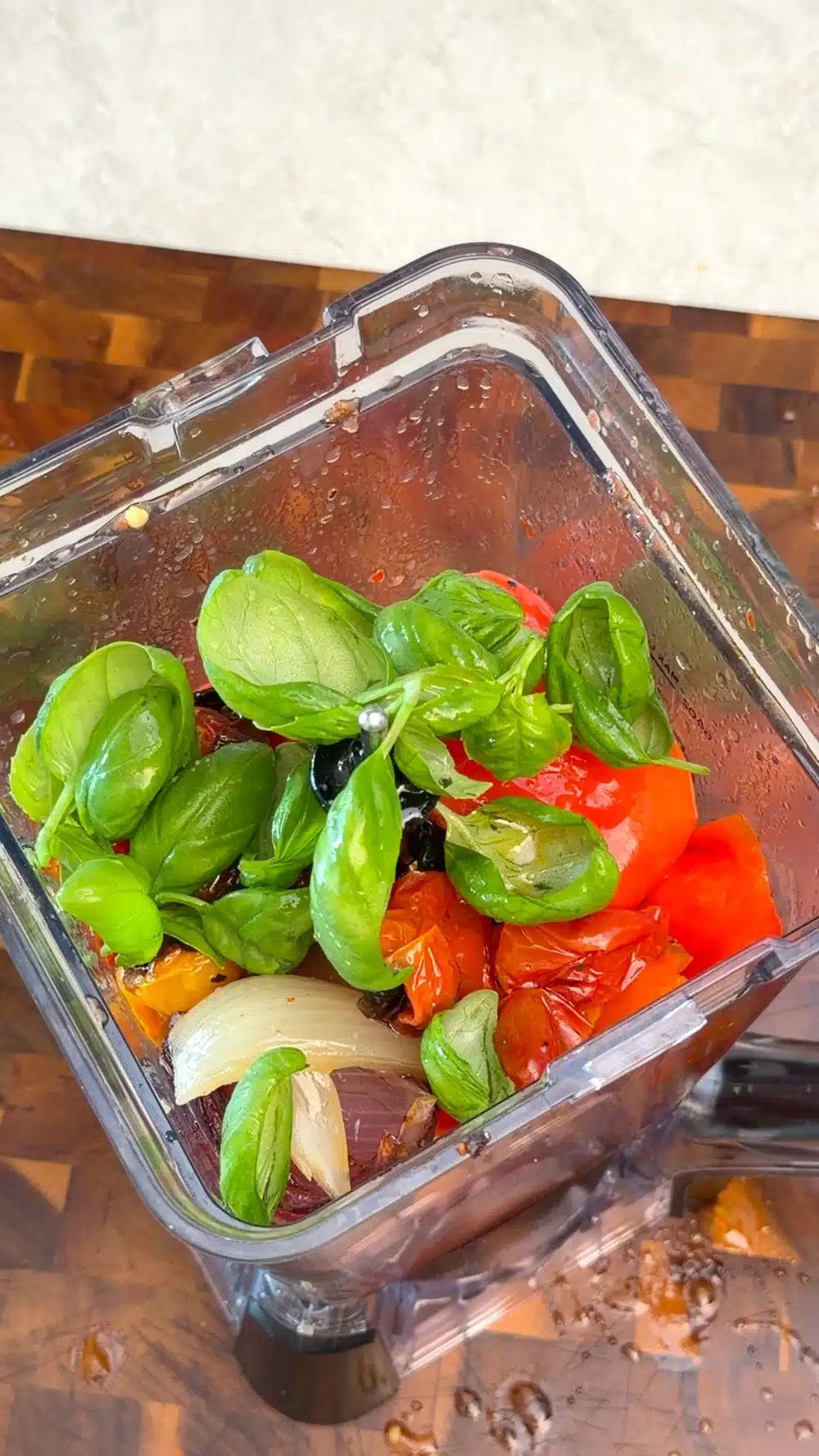
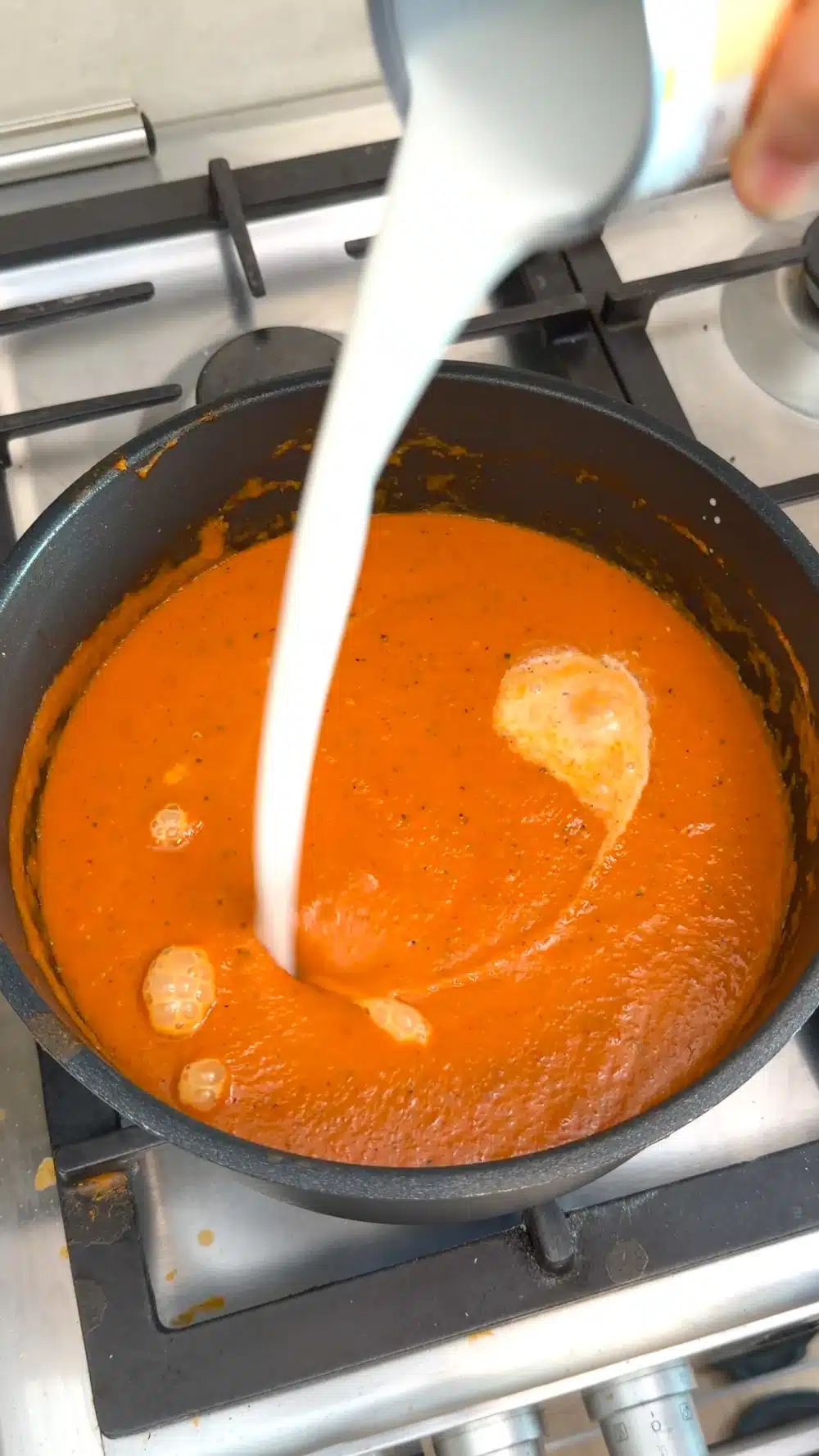
Tips for a Smooth, Flavorful Soup
- Give the vegetables room: Spread them in a shallow layer on a large rimmed tray, using a second tray if needed. A crowded, deep pile holds more moisture and browns less evenly.
- Protect the garlic: The photos show uncovered garlic. For extra protection against drying or burning, drizzle the exposed cloves with oil and wrap the heads loosely in foil. Leave the other vegetables uncovered so they can brown.
- Watch for burning: Keep the onion wedges chunky, check the tray halfway through roasting and remove pieces that finish early. Browned edges add flavor, but trim away blackened onion pieces and loose, blackened pepper skin before blending to avoid bitterness.
- Keep the tray juices: Pour the flavorful juices into the blender along with the vegetables.
- Blend safely: An immersion blender in the pot is the simplest option. For a countertop blender, follow its hot liquid instructions and work in small batches. Never blend hot soup in a sealed personal blender cup.
- Add broth gradually: Blend with the smaller amount first, stir in the cream, then decide whether you need more broth. Taste for salt after adjusting the thickness.
Swaps and Variations
- Pepper substitutions: Red bell peppers and sweet pointed peppers both work. Use about the same weight, removing the stems and seeds. Yellow or orange peppers are also suitable; green peppers are less sweet.
- Different vegan cream: Plain soy cooking cream or cashew cream can replace the oat cream. Coconut cream makes a richer soup with a possible coconut flavor.
- A lighter finish: Use unsweetened oat milk instead of cream and start with less broth. The soup will be thinner and less rich.
- White beans: Blend in drained, rinsed cooked white beans for more body. Add broth gradually to reach the consistency you like.
- A smoky or spicy finish: Add a little smoked paprika or extra cayenne to taste. Taste first if your peppers have already browned deeply.
How To Serve It
Serve with toasted sourdough or a vegan grilled cheese for dipping. Add basil and a small swirl of oat cream just before serving. For a soup and toast lunch with something extra, try my olive bruschetta with sun dried tomatoes.
Frequently Asked Questions
No. Keep the seeds and juices, then blend the tomatoes with the other vegetables. If your blender leaves small pieces of skin and you want a smoother result, pass the finished soup through a sieve.
You do not have to remove every bit of skin. Once the peppers are cool enough to handle, pull away any loose, blackened skin. This helps avoid bitterness and gives a smoother texture, especially with a less powerful blender.
It is optional. A small handful can go into the blender with the roasted vegetables, as shown in the photos, or you can use a few leaves to garnish each bowl. The Italian seasoning still provides flavor if you leave it out.
Oat cooking cream is a thicker product made for cooking. Choose a plain, unsweetened version rather than a sweetened coffee creamer. Oat milk can work, but gives a lighter, thinner soup, so hold back some broth and adjust at the end.
Tomatoes release different amounts of water, and adding all the broth at once can dilute the soup. Start with the smaller amount in the recipe card, then add more only after blending and adding the cream. If it is already thin, simmer uncovered, stirring often, until it thickens, then taste and season again.
This version is written for fresh vegetables. For a shortcut, canned tomatoes and drained jarred roasted peppers can be heated with the roasted onion, garlic and a little broth before blending. Reserve the tomato liquid and add it only as needed. The roasting time and flavor will differ, so do not follow the fresh vegetable timing for that version.
The vegetables contain no gluten, but check your broth and oat cream labels if you need a gluten free soup. Use certified gluten free products where appropriate and serve with gluten free bread or toppings.
Yes. Refrigerate promptly in shallow, covered containers and use within 3 to 4 days, or freeze in portions for up to 3 months for best quality. Thaw in the refrigerator, reheat thoroughly and stir well if the cream separates slightly.
Storing Roasted Red Pepper Soup
Divide leftovers into shallow containers and refrigerate within 2 hours rather than leaving a large pot out to cool completely. Store in the fridge for 3 to 4 days or freeze for up to 3 months for best quality. Reheat on the stove, stirring often, until the soup reaches 165°F (74°C), adding a splash of broth if needed. These cooling and reheating steps follow USDA leftover guidance.
More Vegan Soup Recipes
- Roasted Butternut Squash Soup
- Creamy One Pot Tomato Gnocchi Soup
- Loaded Potato Soup
- Roasted Zucchini Soup
- Spicy Thai Peanut Noodle Soup

Roasted Tomato and Red Pepper Soup
Ingredients
Equipment
Method
- Prepare the tray: Preheat the oven to 400°F (200°C). Arrange the tomatoes, peppers and onions on a large rimmed baking sheet. Drizzle with 2 tablespoons of the olive oil and add the Italian seasoning, optional cayenne, salt and pepper. Toss to coat and spread into a shallow layer, using a second tray if needed.
- Prepare the garlic: Drizzle the remaining tablespoon of oil over the exposed garlic cloves. Wrap the heads loosely in foil and place them on the tray. Leave the other vegetables uncovered.
- Roast until tender: Roast for 40 to 50 minutes, checking halfway and turning the peppers and onions if needed. The vegetables should be soft with browned edges and the garlic cloves soft enough to squeeze out. Remove any pieces that finish early, and give firm garlic more time if needed.
- Prepare to blend: Let the tray cool enough to handle safely. Squeeze the garlic cloves out of their skins and discard the skins and foil. Remove any loose, blackened pepper skin or burnt vegetable pieces. Transfer the vegetables and tray juices to a large pot.
- Blend the soup: Add 2 cups (480 ml) of broth and the optional basil. Blend with an immersion blender until smooth. Alternatively, use a countertop blender rated for hot liquids, following its instructions and working in small batches, then return the soup to the pot. Never put hot soup in a sealed personal blender cup.
- Warm and finish: Stir in the oat cream and warm over medium low heat until gently simmering and hot throughout, stirring often. Add some or all of the remaining cup (240 ml) of broth if needed. Taste and adjust the salt, pepper and optional cayenne.
- Serve: Ladle into bowls and finish with basil, a swirl of cream or a drizzle of olive oil, if you like. Serve with toasted sourdough.
Notes
Tried this recipe?
Let us know how it was!THE DR. VEGAN COOKBOOK COLLECTION
Your next favourite dinner is in here
Explore seven digital cookbooks with 200+ plant-based recipes, from quick dinners to comfort food.
Yummmmmmmmm I love these recipes 🥰
Awesome soup
Thank you Gerald! So happy you enjoyed it😊
Thank you so much Nicole! Happy you enjoy the recipes😊
Made this exactly as written. It turned out DELICIOUS!
Thank you very much. Super easy also.
So glad it turned out well Michele! Thank you for making it😊
Fiz esta sopa hoje….deliciosa!
Muito obrigado, Marcia! Fico feliz que tenha gostado da sopa😊
Very very good! Thank you forbthis wonderful recipe. 😘
Thank you Kimberly! So happy you enjoyed the soup😊
Looks delicious and would like to make but…looks like he threw in some fresh basil in video, but not in recipe. Basil or no basil?
You should make it! It’s fabulous! I’m making it for the second time. Basil was used as a garnish on tops
But I’m sure it would be delicious in the soup too. I used oat milk instead of oat cream. Yum!
Thanks for sharing, Eva! Lovely to hear the oat milk worked for you, and basil is such a nice finishing touch 😊
Hi Yesenia! Basil is optional here. A small handful blended in after roasting would be lovely, or you can leave it out and follow the seasonings in the recipe card😊
Do you need to take the seeds out of the tomatoes?
Hi Alison! No need to remove the tomato seeds for this soup. Roast and blend them with the rest of the tomatoes😊
I have made this recipe about a dozen times and it goes PERFECTLY with sourdough grilled cheese. I use heavy cream rather than the vegan option and substitute beef bone broth for vegetable broth. I also add a couple carrots for some extra sweetness. This is by far the most delicious tomato soup recipe I’ve come across and it’s so nourishing at this time of year. Thank you!
Thanks!!!
I tried the recipe as set out, but used Tamarillo tomatoes. The soup had a slightly bitter tang even after the addition of cream. But I am sure this was because I overcooked the onions. I added butter and the taste evened out. Will make it again with regular tomatoes and see if the taste is different. Lovely, easy recipe. Thank you.
Thanks for sharing, Ani! The tomato swap and how deeply the onions browned could both affect the flavor, so I wouldn’t want to guess the cause. Hope the regular tomato version is more to your taste, and keep an eye on the onions so they soften without burning 😊
Everyone needs to make this!! It was soooooo good! There’s no way this oup should have less than 5 stars. I used chicken broth 2 x red bell peppers and 2 x orange bell peppers. Doubled up on the Italian seasoning, 3 top of kosher salt.
So happy you enjoyed it Nathalie! Thanks for sharing your pepper variation😊
This was delicious! I ended up substituting 4oz low fat cream cheese since I was out of lite Coconut Milk. I added 1/4c grated smoked Gouda also. Dumped it from the pan to a stock pot and used my emulsion blender for less mess. Straight from the garden —Mmmmm!!
So glad you enjoyed it Anne! Garden vegetables make it especially lovely😊
I had a bunch of garden tomatoes I needed to use. This was the recipe for them! Instead of Cayenne pepper, I added a little red jalapeño powder. Paired with some fresh sourdough. Perfect fall meal!
Garden tomatoes and fresh sourdough sound wonderful Taylor! Glad this recipe put them to good use😊
Do you buy the oat creamer or do you make it? If so, any recommendations?
Hi Tae! Look for a plain, unsweetened oat cooking cream, rather than a sweetened coffee creamer. Store-bought is fine, and full-fat coconut cream is also listed as an alternative. No particular brand is needed😊
Tastes great. I doubled the seasonings because I used too much broth (reduced sodium) and it watered it down. I also blended it with white beans to thicken it up. I absolutely love this recipe!!
Glad you brought it to the consistency you wanted Tae! White beans are a lovely addition😊
Here a 2nd time to make this! So much flavor and absolutely delicious! Love these easy soup recipes of yours!!
A second batch is lovely to hear, Jessie! So glad you’re enjoying the soups. Thank you 😊
So delicious, I’m already planning to make this again. Not vegan so replaced the “milk” at the end with half a cube of butter. I did add a couple carrots that were on their last leg and some other random peppers.
So glad you enjoyed it, Megan! Lovely that you were able to use up some extra vegetables too 😊
Hi I tried this recipe today and my Hubby just loved it. For myself I feel like it needed something. Looked at the recipe again…and next time I’m adding smoked paprika. Thanks for this recipe, which I learnt a lot for my next time making it.
Thanks for sharing, Marlene! A little smoked paprika sounds like a nice way to make it more to your taste. So glad your husband enjoyed it too 😊