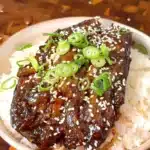
Sticky Eggplant Unagi Rice Bowl
Steamed then pan-seared eggplant glazed in a sweet, savoury soy sauce, served over rice, just like the Japanese eel bowl it is inspired by. Vegan and ready in 35 minutes.
Servings 2 bowls
Calories 420kcal
Ingredients
- 2 Chinese eggplants about 450 g total
- 2 tbsp neutral oil
- 2 tbsp soy sauce or tamari for gluten free
- 1 tbsp rice vinegar or 2 tbsp mirin for a sweeter glaze
- 1 1/2 tbsp sugar
- 1 tsp cornstarch mixed with 2 tbsp water
- steamed rice to serve, about 1½ cups cooked per bowl
- 1 tsp toasted sesame seeds
- 1 spring onion thinly sliced
Instructions
- Steam the eggplant. Steam the whole eggplants over medium heat for 12 to 15 minutes, until a knife slides through with no resistance. They should be fully soft and collapsed. Let them cool enough to handle.
- Halve and score. Cut each eggplant in half lengthwise, then score the cut flesh in a fine crosshatch so it soaks up the glaze and takes on that eel-like look.
- Sear skin side down. Heat the oil in a nonstick pan over medium-high heat. Lay the eggplant halves skin side down and cook for 2 to 3 minutes, then flip and cook the flesh side another 2 to 3 minutes until golden.
- Mix the sauce. While it sears, stir together the soy sauce, rice vinegar, sugar, and the cornstarch slurry until smooth.
- Glaze. Pour the sauce into the pan and let it bubble and thicken around the eggplant for 30 to 45 seconds. Flip the halves through the glaze so both sides coat, then spoon a little extra over the top.
- Serve. Divide the rice between two bowls, lay two eggplant halves over each, drizzle with the pan sauce, and finish with sesame seeds and spring onion.
Notes
Score carefully: Score the flesh deep enough to catch the glaze but not through the skin, so the halves hold together in the pan. Have rice ready: The glaze thickens fast once the cornstarch hits the heat, so have your rice plated and waiting. Char for depth: For a deeper charred flavour, hit the glazed eggplant with a kitchen torch or a few minutes under the broiler before serving, the way traditional kabayaki is grilled.
Nutrition
Calories: 420kcal | Carbohydrates: 78g | Protein: 8g | Fat: 9g | Saturated Fat: 1g | Sodium: 950mg | Fiber: 7g | Sugar: 14g