

Eggplant Unagi Rice Bowl

This eggplant unagi is my favourite kind of magic trick, humble eggplant turned silky, sticky, and savoury enough to stand in for the Japanese eel bowl it is named after. You steam the eggplant until it is meltingly soft, score it into that classic eel-like crosshatch, sear it, then glaze it in a sweet soy sauce until it turns glossy and sticky. Spooned over hot rice with sesame and spring onion, it is comfort in a bowl, and completely plant based.
No eel, no fuss, and honestly the glaze does not know the difference.
Table of Contents
What Is Eggplant Unagi?
Unagi is freshwater eel, and unadon (or unagi don) is the classic Japanese rice bowl of grilled eel glazed in a sweet soy tare and served over rice. Eggplant unagi is the plant based version: steamed and seared eggplant scored to mimic the look of eel fillets, brushed in the same sweet, savoury glaze known as kabayaki sauce. It is popular partly because real eel is expensive and increasingly endangered, and partly because soft, glazed eggplant genuinely nails that rich, sticky, umami bite. This version keeps it fully vegan.
Why This Recipe Works
- Steaming first is the secret. Steaming the whole eggplant until it collapses gives you that signature silky, custardy interior that soaks up the glaze, no oil-soaked frying needed.
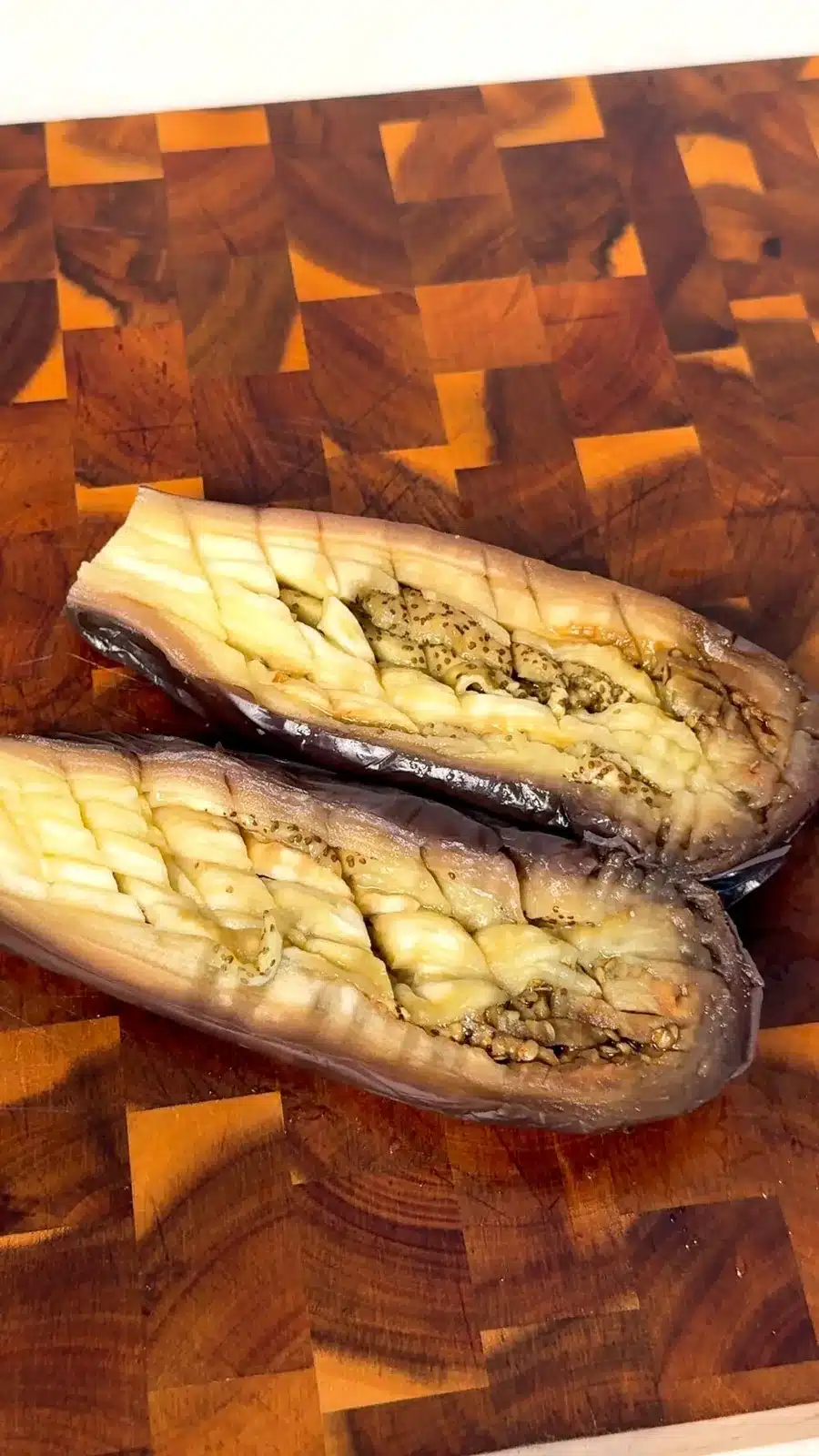
- The crosshatch does two jobs. Scoring the flesh gives it the eel-like look and, more importantly, catches and holds the sticky glaze in every groove.
- A four ingredient glaze. Soy, a little sweetness, and a cornstarch slurry reduce into a glossy, clingy sauce in under a minute. It tastes like you fussed far more than you did.
- Faster and cheaper than the real thing. No eel, no grill, no special trip. Two eggplants, a handful of pantry staples, and a pan get you there.
How To Make Eggplant Unagi
Here is the quick flow. Full measurements and instructions are in the recipe card below.
Swaps and Variations
- Char it like kabayaki. For a deeper, smoky flavour, hit the glazed eggplant with a kitchen torch or a few minutes under the broiler before serving, the way traditional eel kabayaki is grilled.
- No steamer? Prick the whole eggplants and microwave them for 5 to 7 minutes until soft, or roast them until collapsed, then carry on from the scoring step.
- Make it a full bowl. Add sliced avocado, quick pickled cucumber, edamame, or a sprinkle of shichimi togarashi to turn it into a loaded donburi.
- Extra sticky. Stir a teaspoon of maple or a little extra sugar into the glaze if you like it sweeter and glossier.
How To Serve It
Serve the eggplant unagi hot, straight over a bowl of steamed rice with the pan sauce spooned on top, sesame, and spring onion. A side of miso soup, a simple cucumber salad, or some steamed greens rounds it into a proper meal. It is also lovely packed cold into a bento the next day. If you love this kind of savoury, glazed plant based Japanese food, try it alongside my crispy gochujang tofu for a bigger spread.
Frequently Asked Questions
Not exactly, but it captures what people love about unadon: soft, rich, glazed bites over rice in a sweet, savoury soy sauce. The texture of steamed eggplant is silky and tender, and the crosshatch and glaze do the rest.
Long, slim Chinese or Japanese eggplants are ideal because they are thin skinned and creamy when steamed. A regular globe eggplant works if you cut it into thick planks.
The classic glaze is soy sauce, mirin, sugar, and sometimes sake, reduced until sticky. This version keeps it simple with soy, a little sweetness, and a cornstarch slurry to thicken it fast.
Yes. Steam and score the eggplant ahead and keep it in the fridge, then sear and glaze just before serving. Fully glazed leftovers also keep well and are great cold in a bento.
Steaming gives the silkiest result, but you can microwave the pricked whole eggplants for 5 to 7 minutes, or roast them until collapsed, instead.
Use tamari in place of soy sauce and check your other seasonings, and it is naturally gluten free over plain rice.
Yes, and it is more authentic. Swap in 2 tablespoons of mirin for a sweeter, rounder glaze and you can reduce the sugar slightly.
Storing Eggplant Unagi
Keep leftover glazed eggplant in an airtight container in the fridge for up to 3 days, with the rice stored separately. Reheat gently in a pan or the microwave, adding a splash of water if the glaze has thickened too much. It is lovely warm or cold, so it makes a great next-day lunch. The glazed eggplant is not ideal for freezing, as the soft flesh turns watery.
More Recipes You Will Love
- Crispy Gochujang Tofu
- Crispy Tofu Stir Fry and Vegetables
- Spicy Thai Peanut Noodle Soup
- Roasted Garlic Eggplant
- Crispy Tofu Shawarma
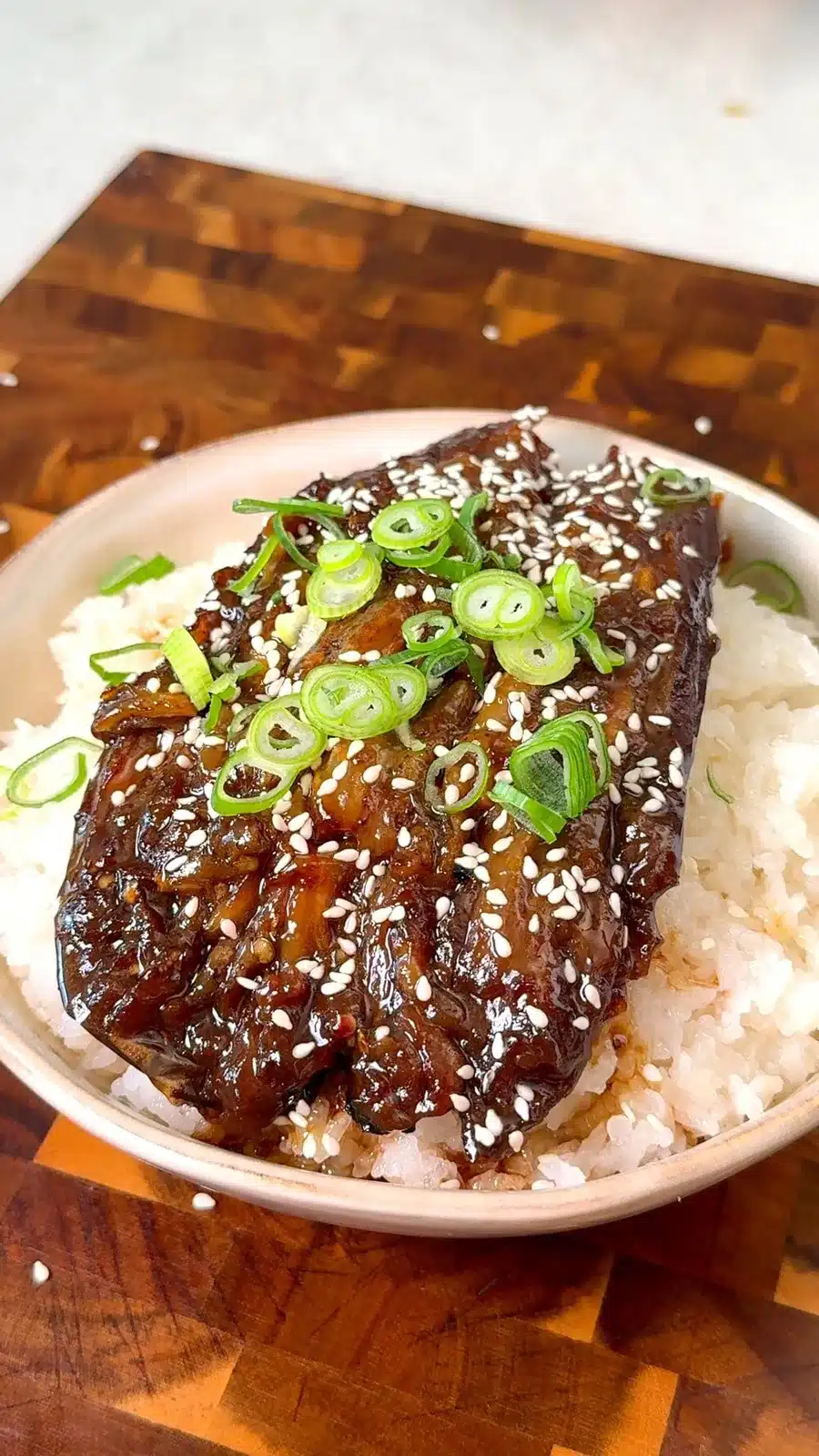
Sticky Eggplant Unagi Rice Bowl
Ingredients
Method
- Steam the eggplant. Steam the whole eggplants over medium heat for 12 to 15 minutes, until a knife slides through with no resistance. They should be fully soft and collapsed. Let them cool enough to handle.
- Halve and score. Cut each eggplant in half lengthwise, then score the cut flesh in a fine crosshatch so it soaks up the glaze and takes on that eel-like look.
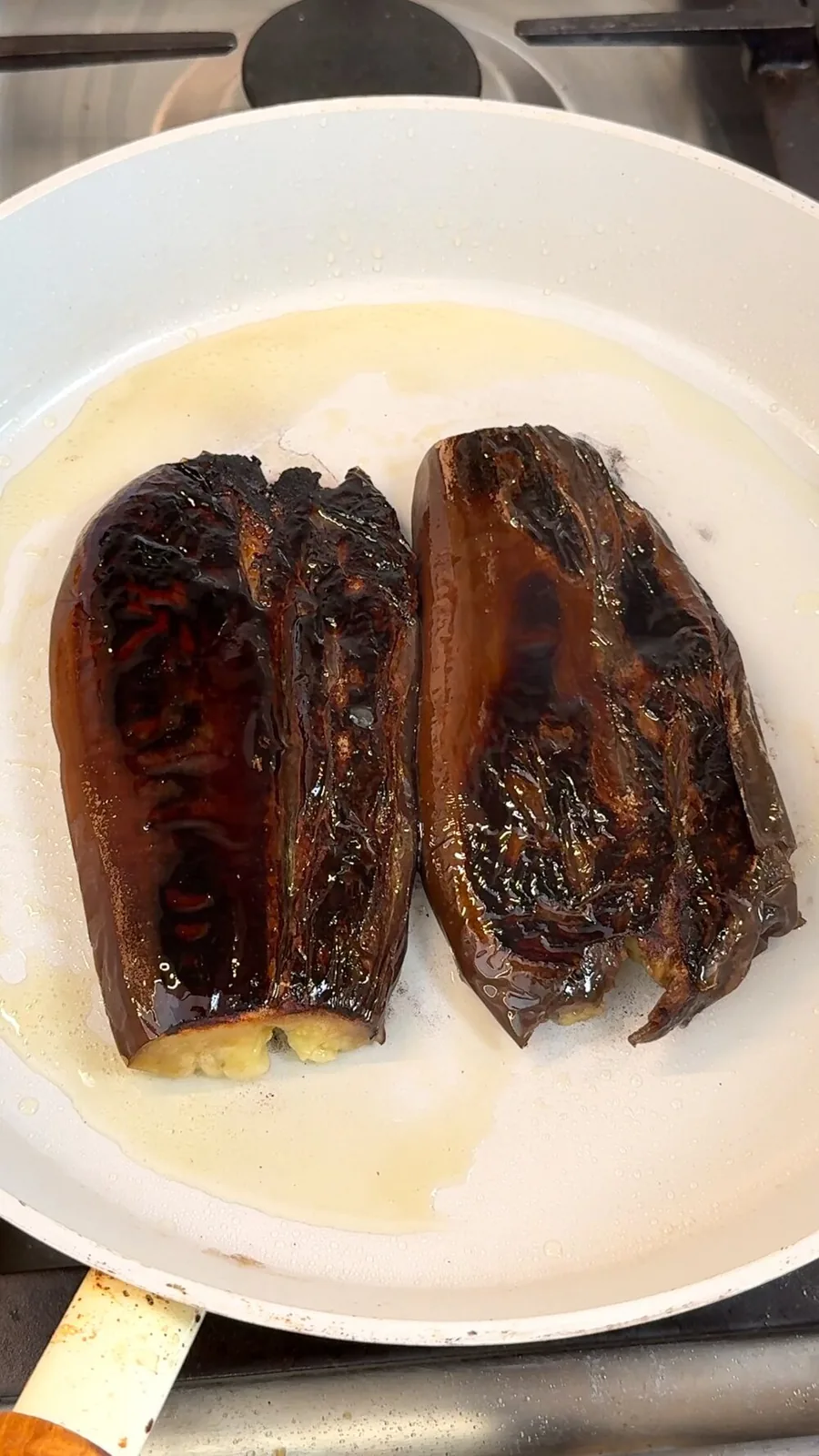
- Sear skin side down. Heat the oil in a nonstick pan over medium-high heat. Lay the eggplant halves skin side down and cook for 2 to 3 minutes, then flip and cook the flesh side another 2 to 3 minutes until golden.
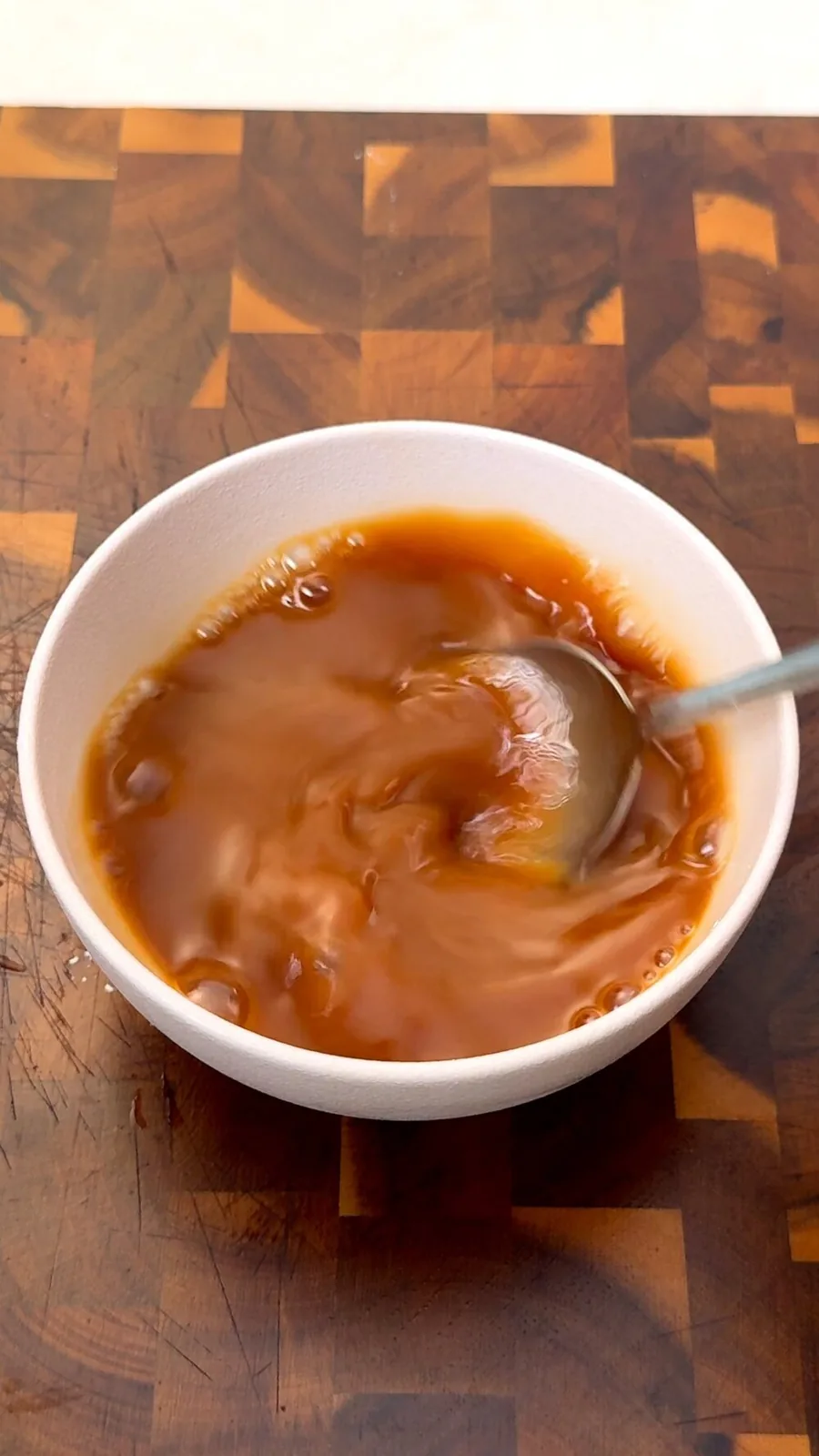
- Mix the sauce. While it sears, stir together the soy sauce, rice vinegar, sugar, and the cornstarch slurry until smooth.
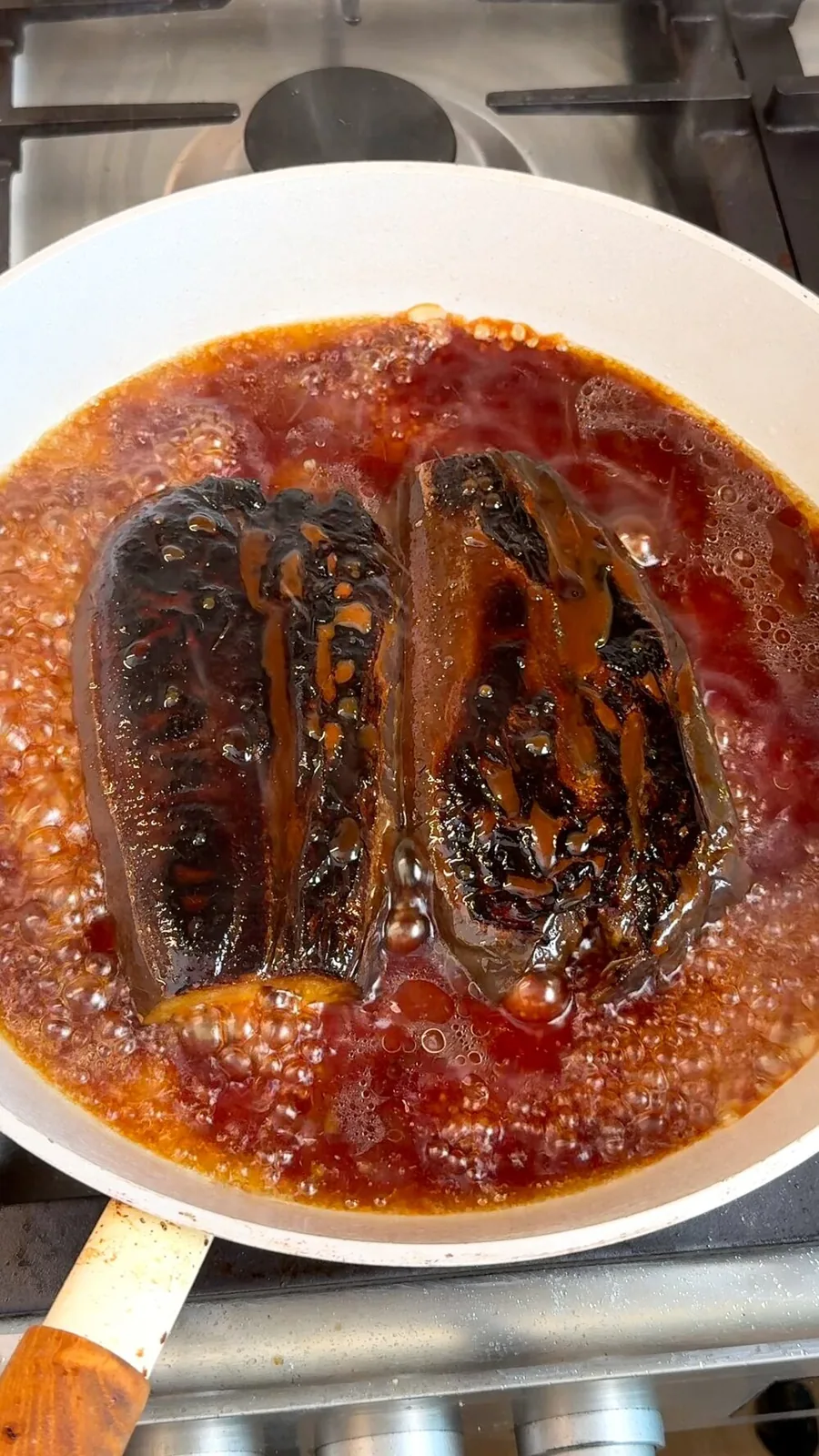
- Glaze. Pour the sauce into the pan and let it bubble and thicken around the eggplant for 30 to 45 seconds. Flip the halves through the glaze so both sides coat, then spoon a little extra over the top.
- Serve. Divide the rice between two bowls, lay two eggplant halves over each, drizzle with the pan sauce, and finish with sesame seeds and spring onion.
Nutrition
Notes
Tried this recipe?
Let us know how it was!THE DR. VEGAN COOKBOOK COLLECTION
Your next favourite dinner is in here
Explore seven digital cookbooks with 200+ plant-based recipes, from quick dinners to comfort food.
Excelente receta , fácil y rápida de preparar
¡Muchas gracias, Stella! Me alegra mucho que te haya gustado😊
Obrigada pela receita. Deliciosa.
Coloquei um pouco de gengibre em pó para dar um sabor picante.
Abraços
Muito obrigado, Flor! Fico feliz que tenha gostado. Adorei a ideia do gengibre! Um abraço😊
Absolutely delicious! I steamed the eggplant the day before so all came together very quickly.
Thank you!