

Pea Pesto Toast (High Protein)

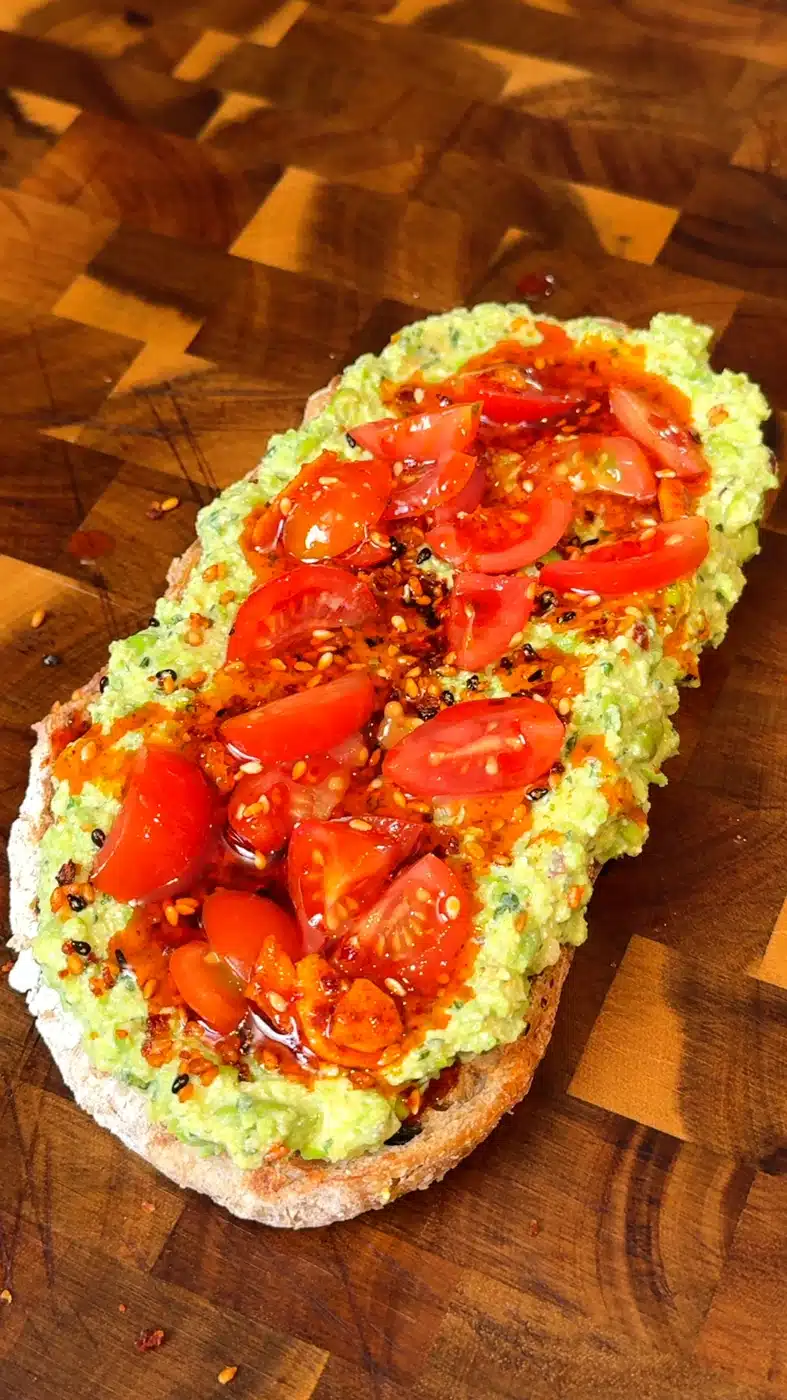
This pea pesto toast is what I make when I want avocado toast energy without the avocado price tag. Frozen peas, tofu, and fresh mint blend into a thick, creamy green pesto in about 60 seconds, then it gets piled on crispy sourdough with juicy cherry tomatoes and a drizzle of chili oil. Around 17 grams of protein per toast, no nuts, no dairy, no cooking.
Table of Contents
Why You’ll Love This Pea Pesto
- Tofu instead of parmesan and pine nuts. Classic pesto gets its body from cheese and nuts. Mine gets it from firm tofu, which makes it creamier, cheaper, and roughly triples the protein. Nutritional yeast covers the savory, cheesy depth.
- Frozen peas, zero cooking. Frozen peas are blanched before freezing, so they are already cooked. A quick hot water soak defrosts them and the food processor does the rest. The whole spread is done before your bread finishes toasting.
- Mint keeps it fresh. Peas and mint are a classic pairing for a reason. The mint cuts through the richness and keeps the pesto tasting bright instead of heavy.
- One taste-and-adjust rule. If it tastes flat, it needs salt or lemon. If it tastes sharp, add a little more agave or olive oil. That is the entire skill of this recipe.
How To Make Pea Pesto Toast
Here is the quick flow. Full measurements and instructions are in the recipe card below.
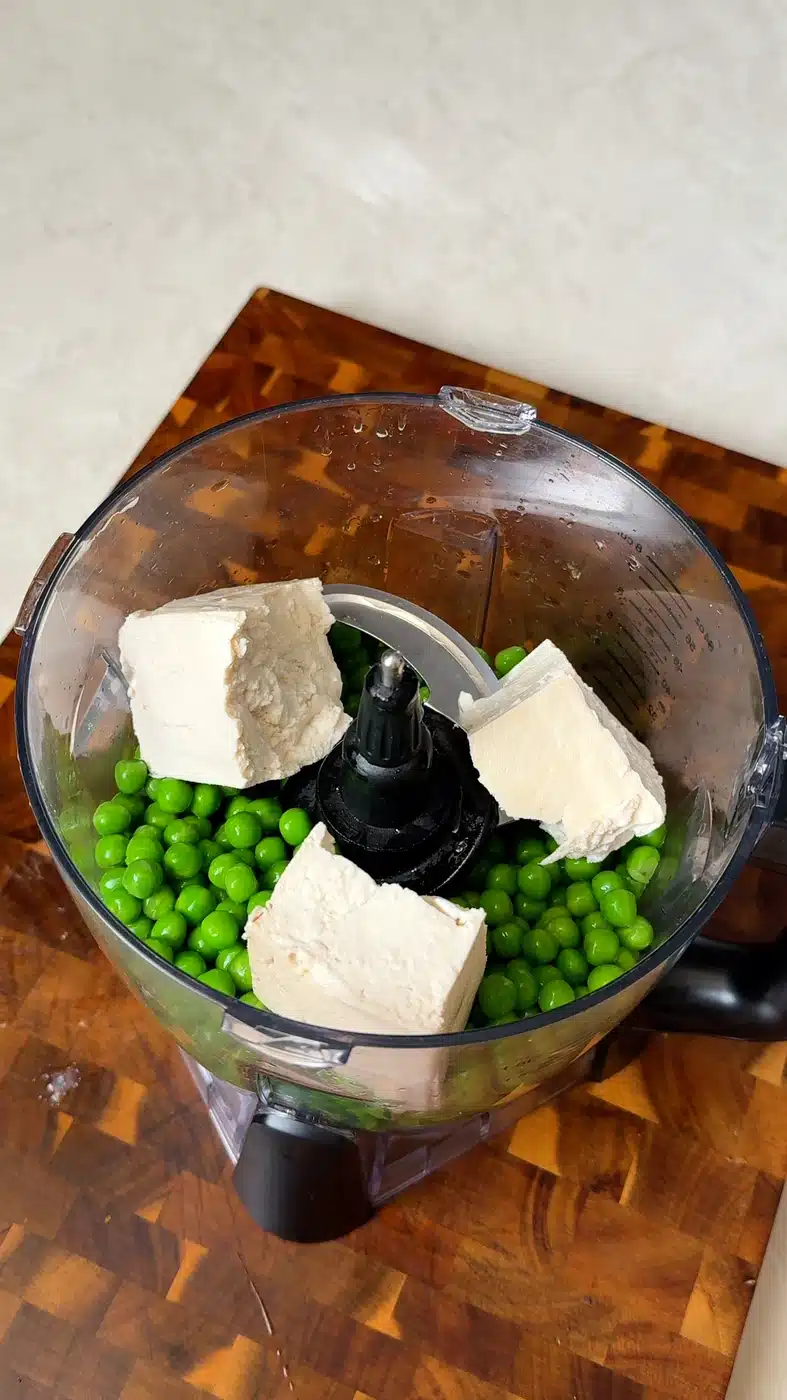
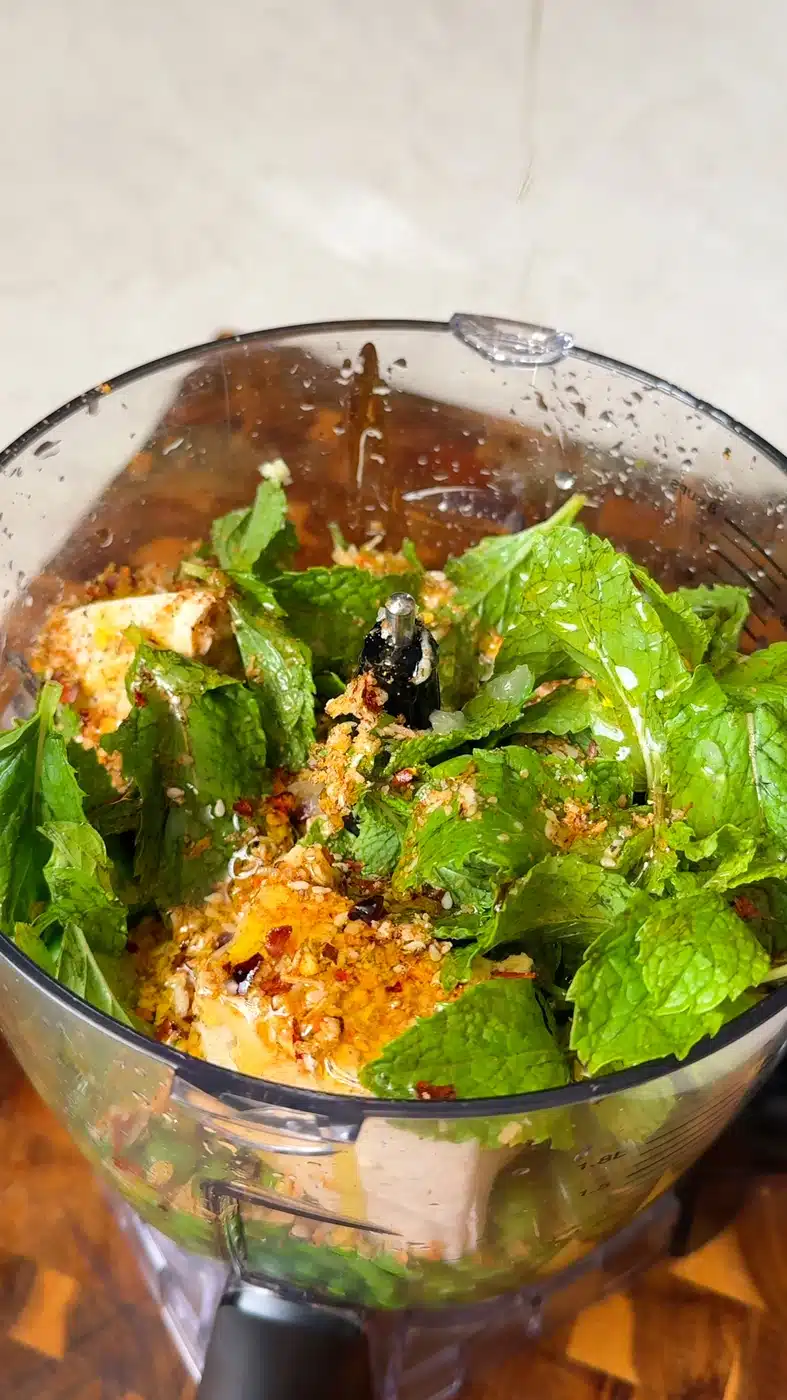
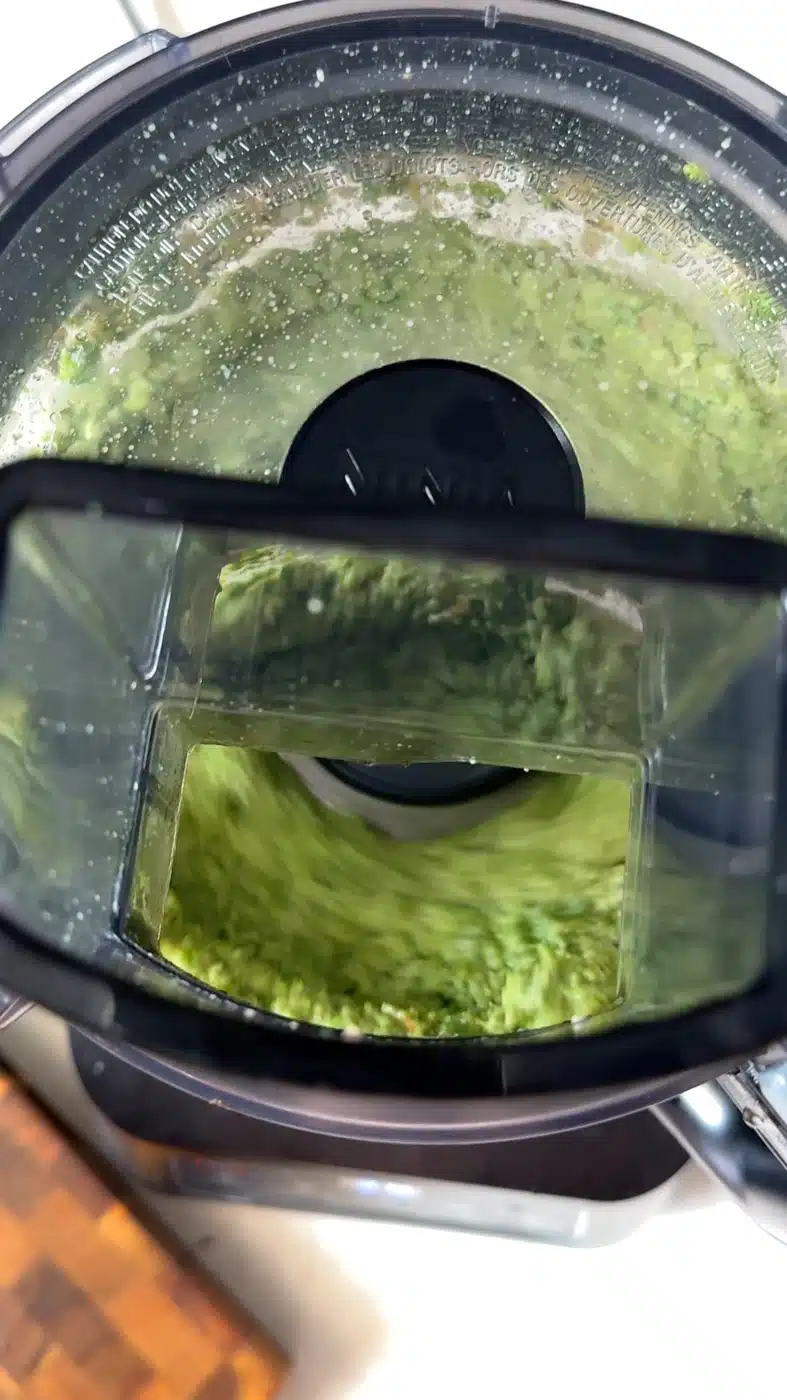
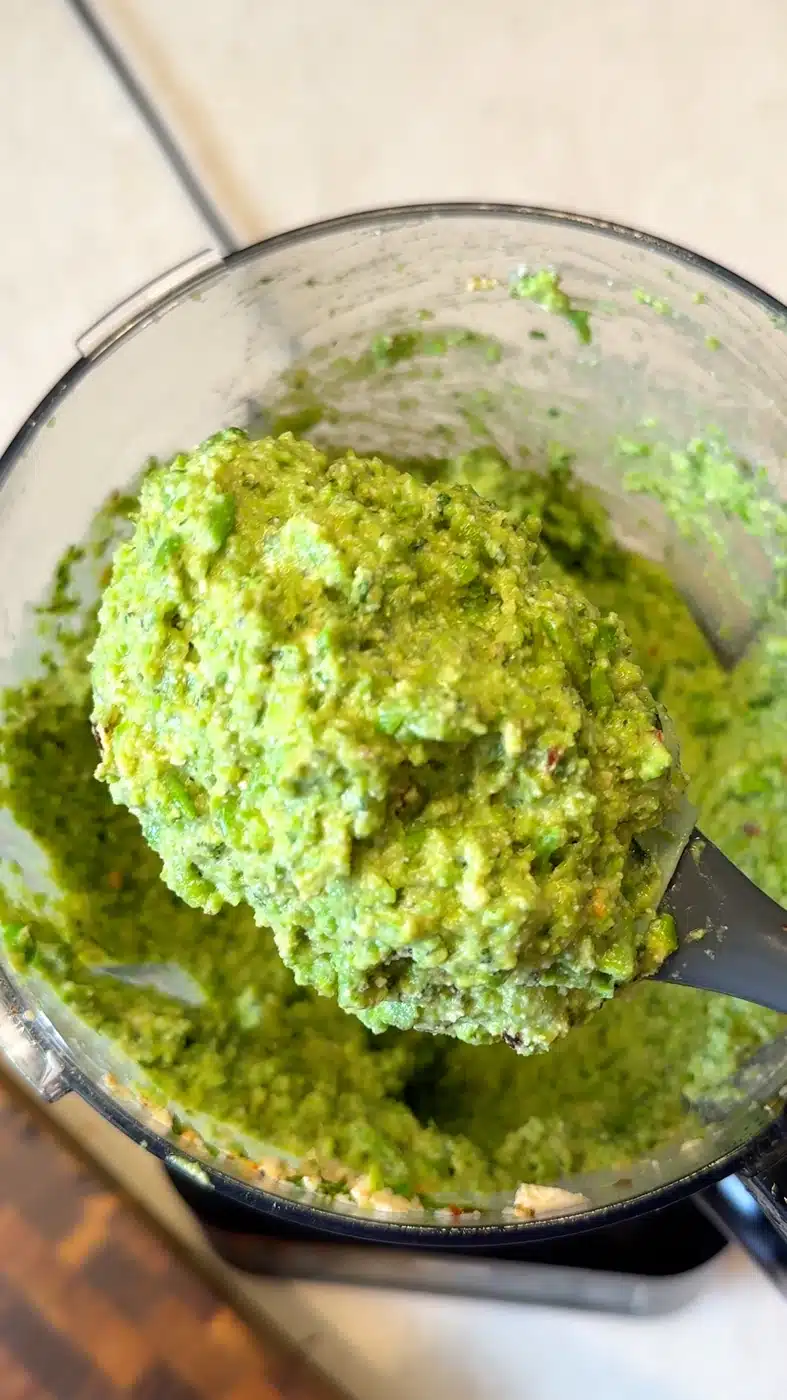
High Protein Toast Without Cottage Cheese or Eggs
Every high protein toast recipe right now is either cottage cheese or eggs. This one gets there with plants alone. Peas are one of the most protein dense vegetables you can buy, with about 8 grams per cup, and tofu is a complete protein containing all nine essential amino acids. Together with the sourdough, each toast lands around 17 grams of protein. If you want to push it higher, blend in 3 tablespoons of hemp seeds. They disappear into the texture and add about 10 more grams of protein to the batch.
A Nut Free Pea Pesto (No Pine Nuts Needed)
Traditional pesto leans on pine nuts, and most homemade versions swap in cashews or walnuts. This one contains no nuts at all, which makes it safe for school lunchboxes and nut allergies, and it skips the most expensive ingredient in classic pesto entirely. The tofu delivers the same rich, thick body that nuts normally provide.
Serve This Pea Pesto as a High Protein Dip
This recipe makes about 2 cups, and it moonlights as a dip. Spoon it into a bowl, drizzle with olive oil and chili oil, and serve with warm pita, crackers, or raw vegetables. It holds its own next to hummus on any snack board and brings more protein per scoop.
How To Serve It
Thick cut sourdough is the move, toasted until the edges crunch. Beyond the toast, this pea pesto works stirred through hot pasta with a splash of pasta water, spread inside a sandwich or wrap instead of mayo, or dolloped over roasted vegetables and grain bowls. Green peas bring fiber, vitamin K, and folate along with the protein, so it earns its place on the plate in more ways than one.
Storing Your Pea Pesto
Store the pea pesto in an airtight container in the fridge for up to 4 days. The surface may darken slightly, so press a piece of parchment or a thin layer of olive oil on top to keep it bright green. Freeze for up to 2 months in small portions and thaw overnight in the fridge. Always assemble the toast fresh.
Frequently Asked Questions
Frozen peas are blanched in boiling water before freezing, so they arrive already cooked. The hot water soak just defrosts them. They are completely safe to eat straight from the bag once thawed.
Yes, but boil them for 2 to 3 minutes first and cool them under cold water. Fresh peas are firmer and starchier than frozen, which are picked and frozen at peak sweetness.
Basil is the classic pesto route and works perfectly. A half mint, half parsley mix also works. Cilantro takes it in a different but delicious direction.
Any tofu works. Firm or extra firm gives the thick, spreadable texture in the photos, just pat it dry with a kitchen towel first. Medium and soft blend up a little creamier. Silken makes the smoothest, loosest version, closer to a whipped spread than a pesto, so drain the peas extra well if you go that route.
Yes. Blend 2 to 3 minutes longer, add an extra tablespoon of olive oil, and you get a smooth whipped spread instead of a textured pesto.
The pesto itself is gluten free if you use tamari instead of soy sauce. Serve it on your favorite gluten free bread.
Almost always salt or acid. Add another pinch of salt and a squeeze of lemon, blend again, and taste. Wet peas can also dilute the flavor, so drain them well.
More Recipes You’ll Love
- Pan Con Tomate (Spanish Tomato Bread)
- Crispy Breakfast Potatoes With Chickpeas
- Caramelized Pearl Onion Dip With Creamy Feta Hummus
- Easy Vegan Muhammara (Roasted Red Pepper Dip)
- Crispy Tofu Shawarma
Pea Pesto Toast
Ingredients
Method
- Defrost the peas. Place the frozen peas in a bowl, cover with hot water, and let sit for 5 minutes. Drain very well and shake off excess water so the pesto stays thick.
- Load the food processor. Add the peas, tofu, mint, garlic, nutritional yeast, soy sauce, agave, lemon juice and zest, olive oil, onion powder, smoked paprika, cumin, chili flakes, salt, and pepper.
- Blend. Process for 30 to 60 seconds, scraping down the sides once, until thick and creamy with a little texture left, like a chunky pesto.
- Taste and adjust. Flat means more salt or lemon. Sharp means a touch more agave or olive oil.
- Toast the bread. Toast the sourdough until golden and crisp at the edges.
- Assemble. Spread a thick layer of pea pesto on each slice. Top with cherry tomatoes, a drizzle of chili oil, and a pinch of chili flakes or sesame seeds. Serve immediately.
Nutrition
Notes
Tried this recipe?
Let us know how it was!THE DR. VEGAN COOKBOOK COLLECTION
Your next favourite dinner is in here
Explore seven digital cookbooks with 200+ plant-based recipes, from quick dinners to comfort food.
Excellent Pesto.
Loved the protein level and great flavor.
Thank you, Beverley! So happy you enjoyed the pesto 😊
Just made it, it’s delicious!
Thank you, Natalia! So happy you enjoyed it 😊
10/10. Made it for a friend and they loved it as well. This was so easy to make and flavorful z
So happy you and your friend enjoyed it! Thank you 😊
I made this last night with sugar snap peas and mint fresh from my garden; tastes like a mouthful of summer!
That sounds so fresh, Lilu! Lovely that you could use peas and mint from your garden 😊
I made it! I love it! Dee-lish! It’s really really great! I only used about half the amount of mint.
Love hearing that Ann! Glad you adjusted the mint to your taste and enjoyed it😊
This was so delicious! Based on our personal preference, we used parmesan cheese instead of nutritional yeast, 1 cup of canned/rinsed northern beans instead of tofu, and honey instead of agave. Did not do the optional drizzle at the end. So yummy and will make this again.
For anyone needing the tip, 1 cup of packed mint leaves is 2 produce packs of mint with the leaves pulled.
So glad you enjoyed it Cynthia! Lovely to hear the white beans worked well for you, and thanks for sharing your tips😊