

White Bean Pasta Sauce: The Easy Fiber Trick for Pasta Night

The easiest place to add more beans might be the pasta sauce you already love.
This white bean pasta sauce trick is simple: blend cooked white beans into tomato sauce for a thicker, creamier texture. You keep the garlic, the basil, the comforting bowl of pasta. The beans bring fiber and plant protein along for dinner.
If you saw the white-bean sauce trick on my social media, here is how to use it at home: how much to start with, how to keep the flavor balanced, and which of my recipes already use blended beans.
The quick version: Start with ½ cup of drained, cooked white beans for 2 cups of tomato pasta sauce. Blend until smooth, warm gently, then loosen with a splash of pasta water. Taste before adding more beans.
How to blend white beans into pasta sauce
You can start with a jar of marinara or a homemade tomato sauce. A sauce with garlic, herbs and a flavor you already enjoy is the easiest starting point.
What you need
- 2 cups tomato pasta sauce: homemade or a favorite vegan jarred sauce.
- ½ cup cooked white beans: drained and rinsed. Cannellini are a good first choice.
- Reserved pasta water: enough to loosen the finished sauce.
- Seasoning to finish: salt, pepper, basil, chili flakes or a little lemon juice, depending on what your sauce needs.
This is a flexible starting ratio, so you can adapt the sauce you already make. For a complete dinner recipe with the full ingredient list, jump to my recipes below.
- Blend the beans with a little sauce. Put the beans and enough sauce to get the blender moving into a blender. Blend until completely smooth, stopping to scrape down the sides if needed. Use cool or lukewarm sauce unless your blender is specifically designed for hot liquids.
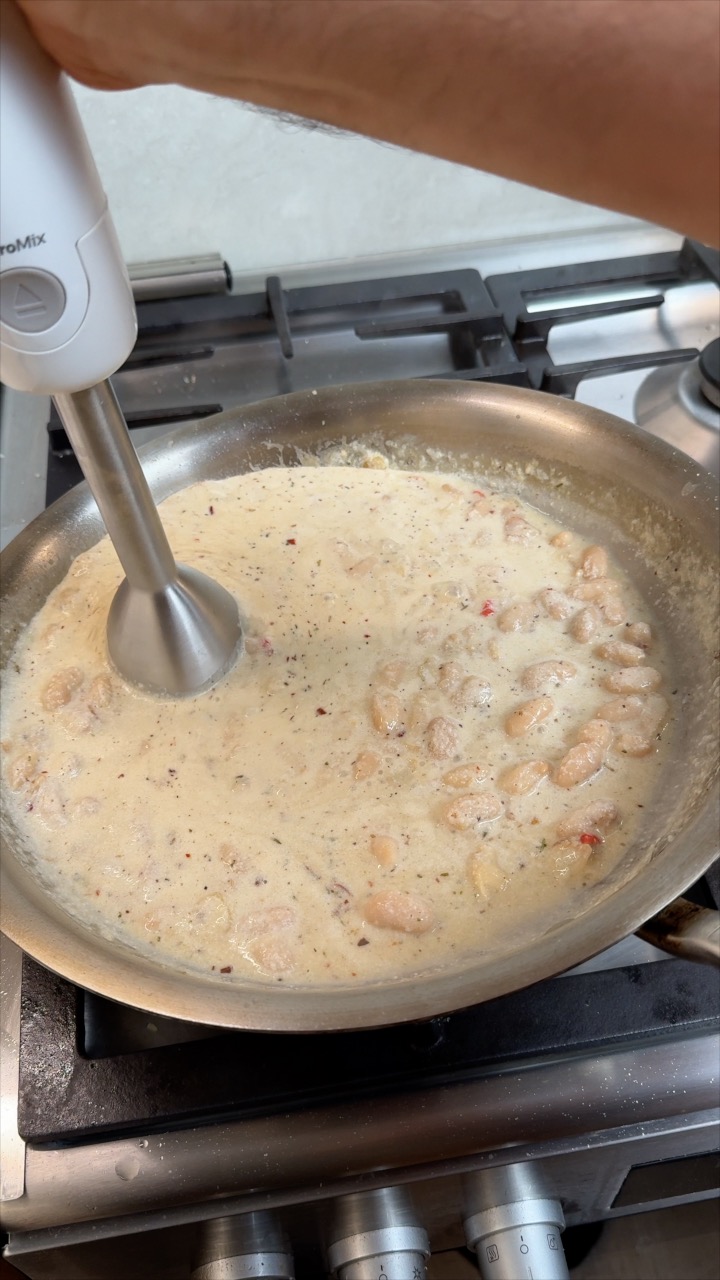
- Stir into the rest of the sauce. Transfer to a pan and heat gently, stirring so the thickened sauce does not catch on the bottom. An immersion blender also works in a suitable deep container; keep the blade submerged to reduce splashing.
- Loosen, taste and toss. Add pasta water a splash at a time until the sauce coats the pasta easily. Taste again after adding the beans, then adjust the seasoning and toss with your cooked pasta.
Want a more bean-forward sauce? Blend in a little more next time. Adding an entire can immediately is not necessary, especially if you are getting used to eating more beans.
Will it taste like beans?
White beans are mild, but they are not flavorless. A modest amount blends easily into a well-seasoned tomato sauce. Add a lot, and the sauce will become thicker, paler and more noticeably bean-flavored.
The goal is a sauce you want another forkful of. Start small, blend thoroughly, then taste. Garlic, roasted tomatoes, basil and a little acidity help the sauce keep its personality.
Texture matters just as much as flavor. Fully cooked, tender beans are essential. If you use beans cooked from dry, they should mash easily before they go into the blender. Blending is not a substitute for cooking them.
Two of my recipes that use this trick
These recipes put blended beans to work in two different ways: a rich white sauce and a roasted vegetable sauce.

Creamy White Bean Pasta with Crispy Tofu
Here, white beans are part of the sauce itself. They simmer with garlic and vegan cream, then get blended smooth before the pasta goes in. Crispy tofu gives the finished bowl a lovely contrast.
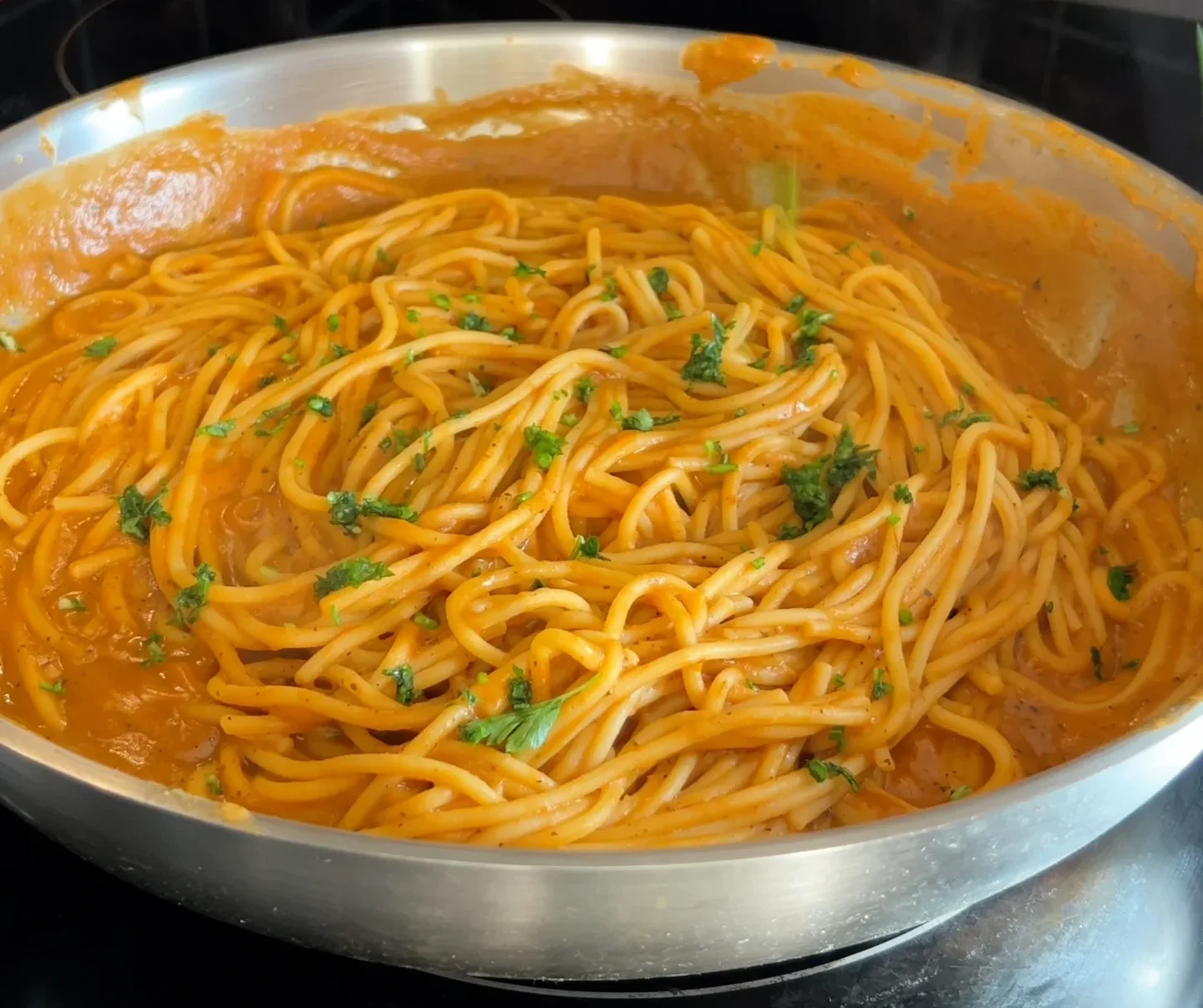
Roasted Vegetable Pasta Sauce
Tomatoes, peppers and other vegetables roast with garlic, then blend into a smooth sauce. The recipe includes an optional cooked-bean addition at the blending stage. Include those beans to turn this into your next bean-enriched pasta night.
How much fiber does adding white beans really add?
The useful answer is on your bean label. The amount varies with the type of bean, the product and the portion you use.
The “7 grams per half cup” claim you may have seen is about a portion of beans, not automatically a half cup of finished pasta sauce. Once you mix beans into a pan and divide it between people, the added fiber is divided too.
More beans in the pan means more fiber in the meal. It does not mean every serving gets the full amount listed for the beans you added.
For a concrete example, Napolina lists 8 grams of fiber per 100 grams of drained cannellini beans. That is a useful reminder to use your own product label rather than assume every can matches a viral number.
Blending the whole cooked beans into the sauce keeps their fiber in the dish. You are changing the texture, rather than straining the beans out.
For ideas beyond pasta night, my guide to what 30 grams of fiber looks like shows how different foods can contribute across a day.
Why this small change is worth making
Beans bring fiber and plant protein to a meal you already know how to make. That makes this a practical habit: you do not need a completely different dinner to eat more pulses.
There is research behind eating pulses regularly. A review of 26 randomized trials found that diets emphasizing beans, lentils, chickpeas or peas modestly lowered LDL cholesterol compared with control diets. Those studies looked at regular pulse intake over time, not this particular sauce.
For digestion, fiber can help keep stools softer and easier to pass. If you are increasing your intake, NIDDK recommends adding fiber gradually and drinking enough fluids. Starting with a small amount of beans is sensible if a sudden increase usually leaves you bloated.
How to fix the most common sauce problems
“It is too thick.”
Stir in warm pasta water or water, a little at a time. The sauce should coat the pasta while still moving easily in the pan. It may need another splash after standing.
“It tastes a bit flat.”
Check the salt first. Then try basil, black pepper or a small squeeze of lemon. If the bean flavor is stronger than you want, add more tomato sauce to rebalance it.
“It is grainy.”
Check that the beans are fully tender, add enough liquid for the blender to circulate, and blend again. A thick mixture can sit above the blades without becoming smooth.
“It feels heavy rather than creamy.”
Loosen it before adding more fat or cream. Beans already provide plenty of body. A small amount of olive oil can round out the sauce, but it will not fix a paste-like consistency on its own.
Make once, use for another dinner
Freeze extra sauce in meal-sized portions before mixing it with pasta. Cook fresh pasta when you serve it, and add a splash of water while reheating to bring the sauce back to a spoonable consistency.
Refrigerate leftovers promptly in shallow containers and use within 3–4 days. For longer storage, freeze. Thaw in the fridge and reheat thoroughly to 165°F / 74°C, following USDA leftover guidance.
White bean pasta sauce FAQs
Which beans work best?
Cannellini are a useful starting point for their mild flavor and creamy texture. Great northern or navy beans also work. Choose plain, fully cooked beans rather than beans already packed in a strongly flavored sauce.
Can I add beans to store-bought pasta sauce?
Yes. Blend a small portion of your jarred sauce with the drained beans, then stir it back into the pan. Check the jar ingredients if you want the finished sauce to be vegan.
Do I need cream?
No cream is needed for the basic tomato-sauce method above. Beans give it body, and pasta water helps you control the consistency. My linked white bean pasta recipe uses vegan cream for a richer version.
Can I use this trick in soup?
Yes. Blend cooked white beans into a smooth vegetable soup in the same way, adding enough liquid to keep it soup-like. Start with a little and adjust the flavor after blending.
Does blending make beans easier to tolerate?
It removes the whole-bean texture, but it does not remove everything in beans that can cause gas. Portion size still matters. Increase gradually rather than assuming a smooth sauce will suit everyone.
Try it on your next pasta night
Keep the sauce you love. Add a little white bean creaminess. Taste, adjust, and build from there.
For a full recipe, start with my Roasted Vegetable Pasta Sauce with the optional beans, or make the Creamy White Bean Pasta with Crispy Tofu when you want something richer.
Would you try this in a tomato sauce or a creamy garlic sauce? Tell me in the comments.