

One Pot Coconut Curry Noodles

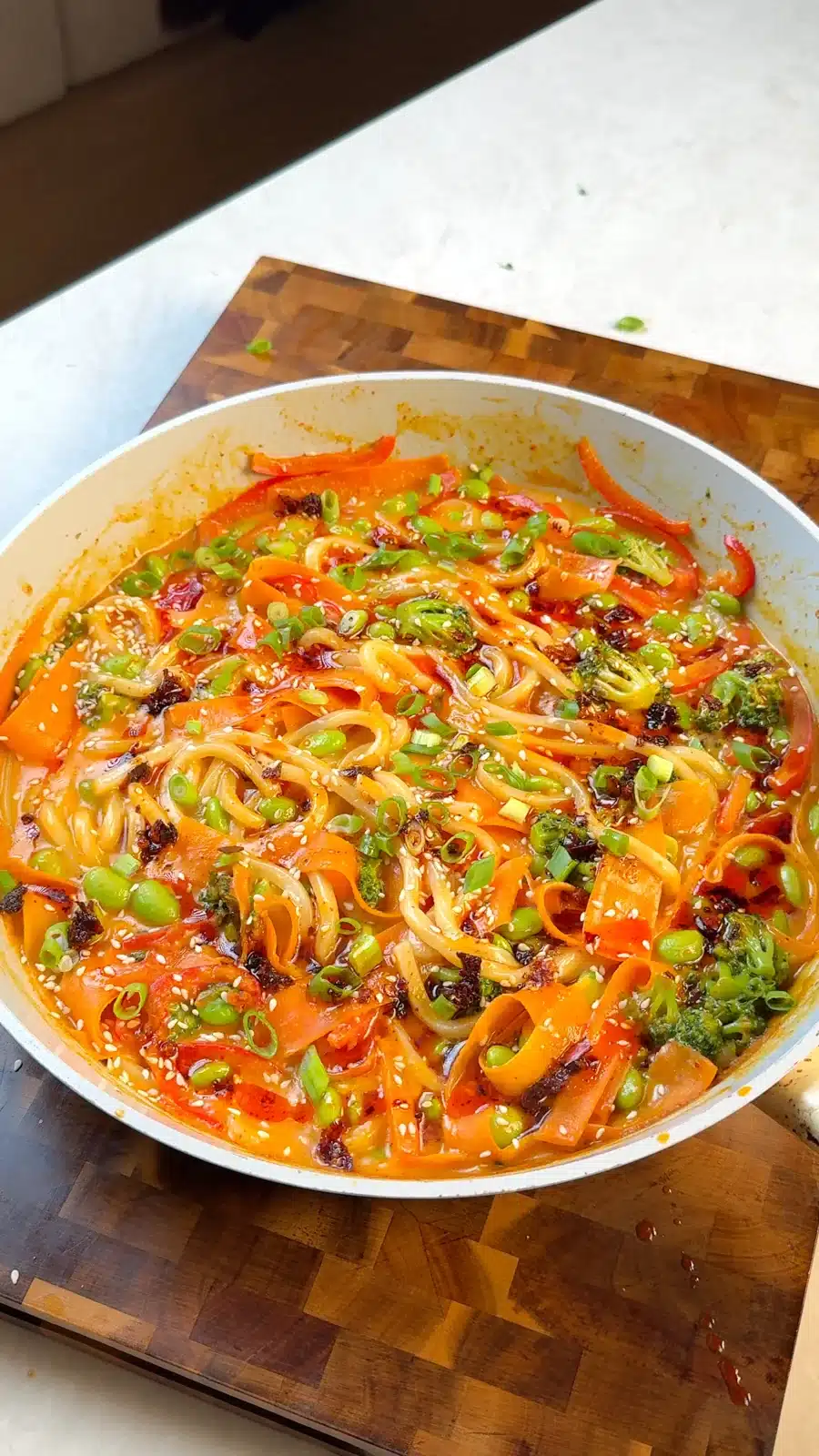
These one pot coconut curry noodles combine chewy udon, colorful vegetables and edamame in a creamy peanut sauce. Everything cooks together in a covered pan, so there is no separate pot of water to boil or noodles to drain.
Red curry paste brings warmth, coconut milk makes the sauce rich, and a spoonful of peanut butter helps it cling to the noodles. Finish with spring onions, sesame seeds and as much chili oil as you like.
Table of Contents
Why It Works
- One pan from start to finish: Frozen precooked udon heats directly in the sauce, so there is no separate boiling or draining.
- A creamy sauce with some heat: Coconut milk and peanut butter balance the red curry paste.
- Vegetables in every bowl: Thin carrot ribbons, small broccoli florets and pepper strips cook alongside the noodles.
How To Make It
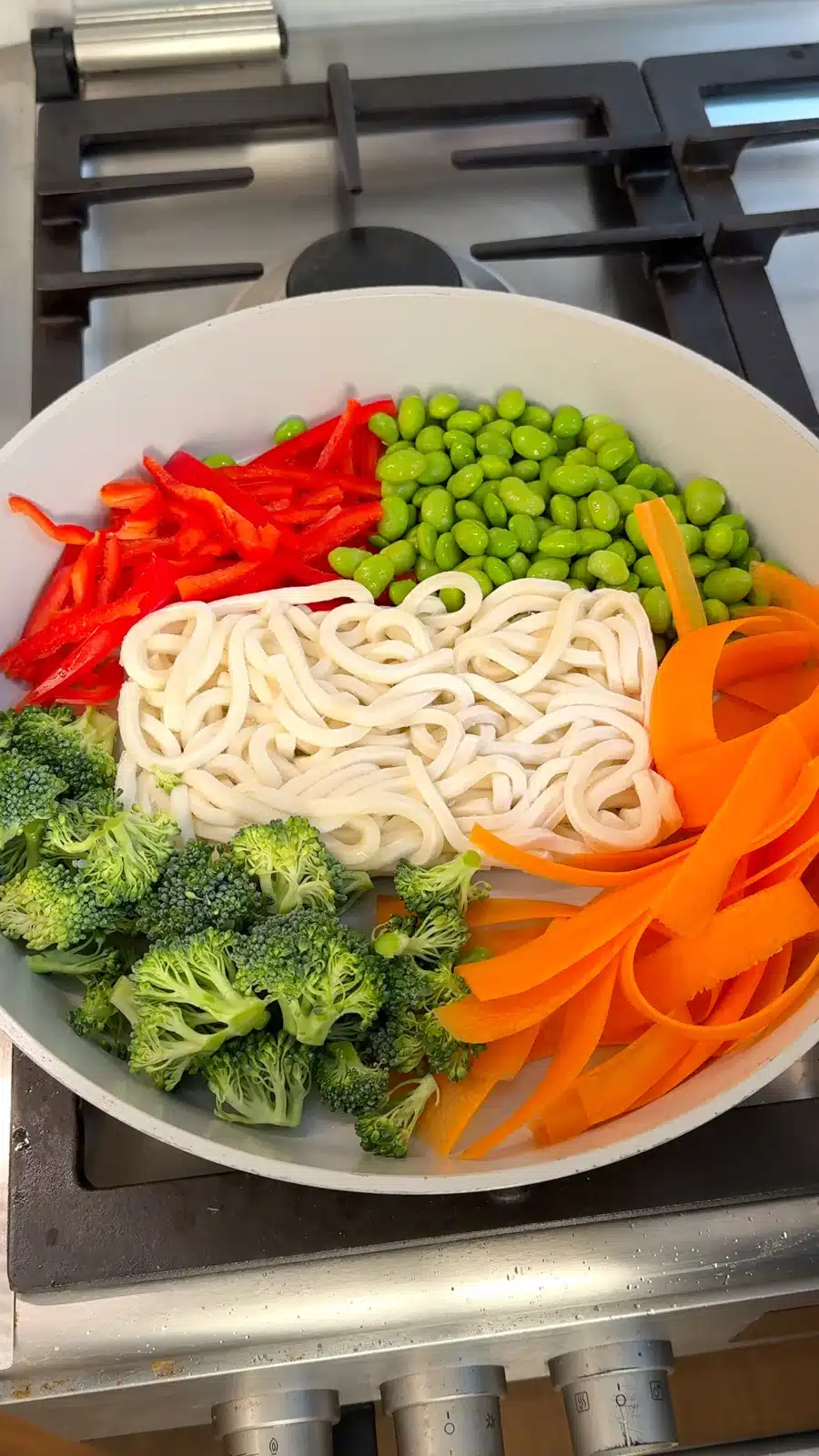
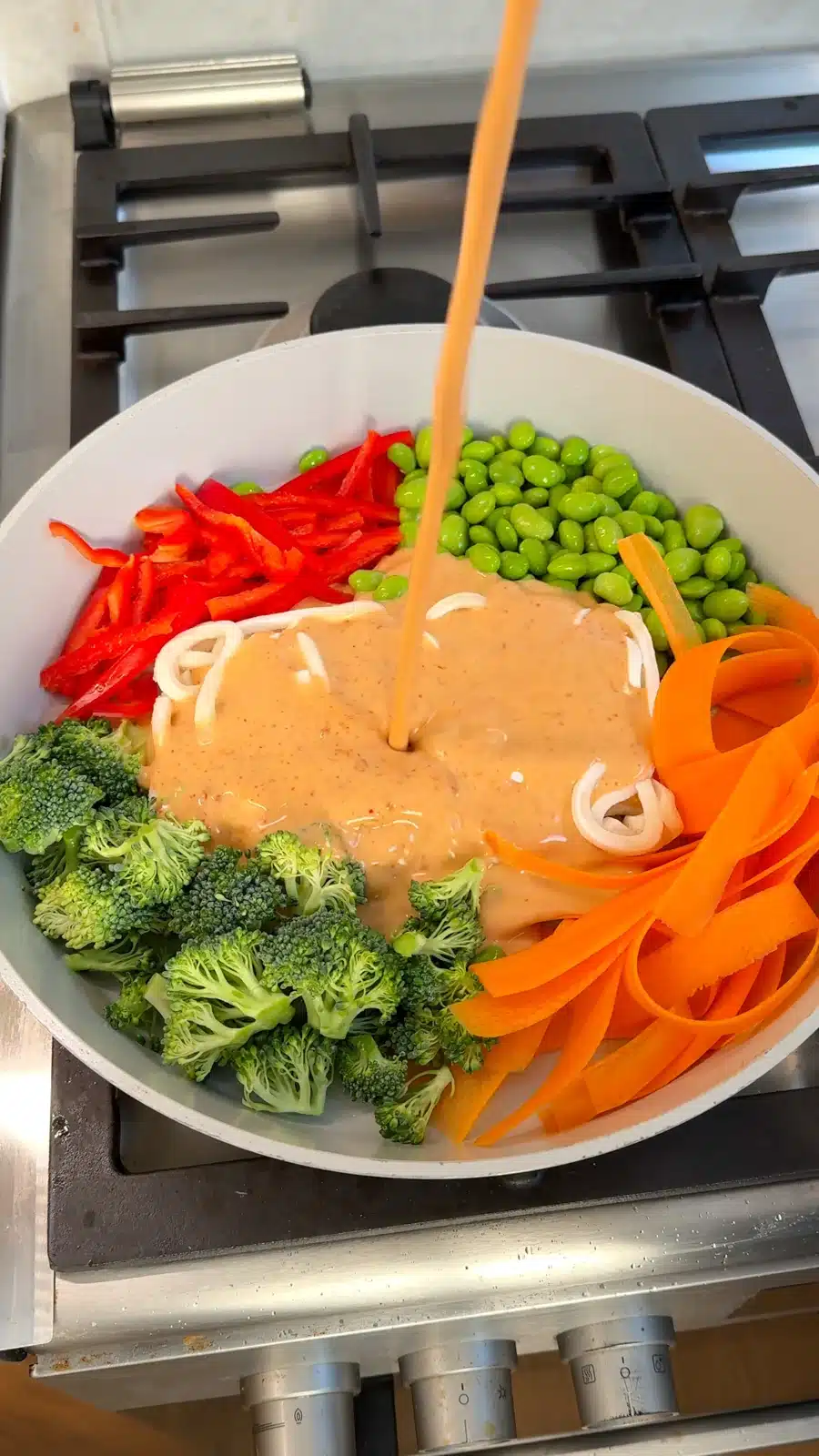
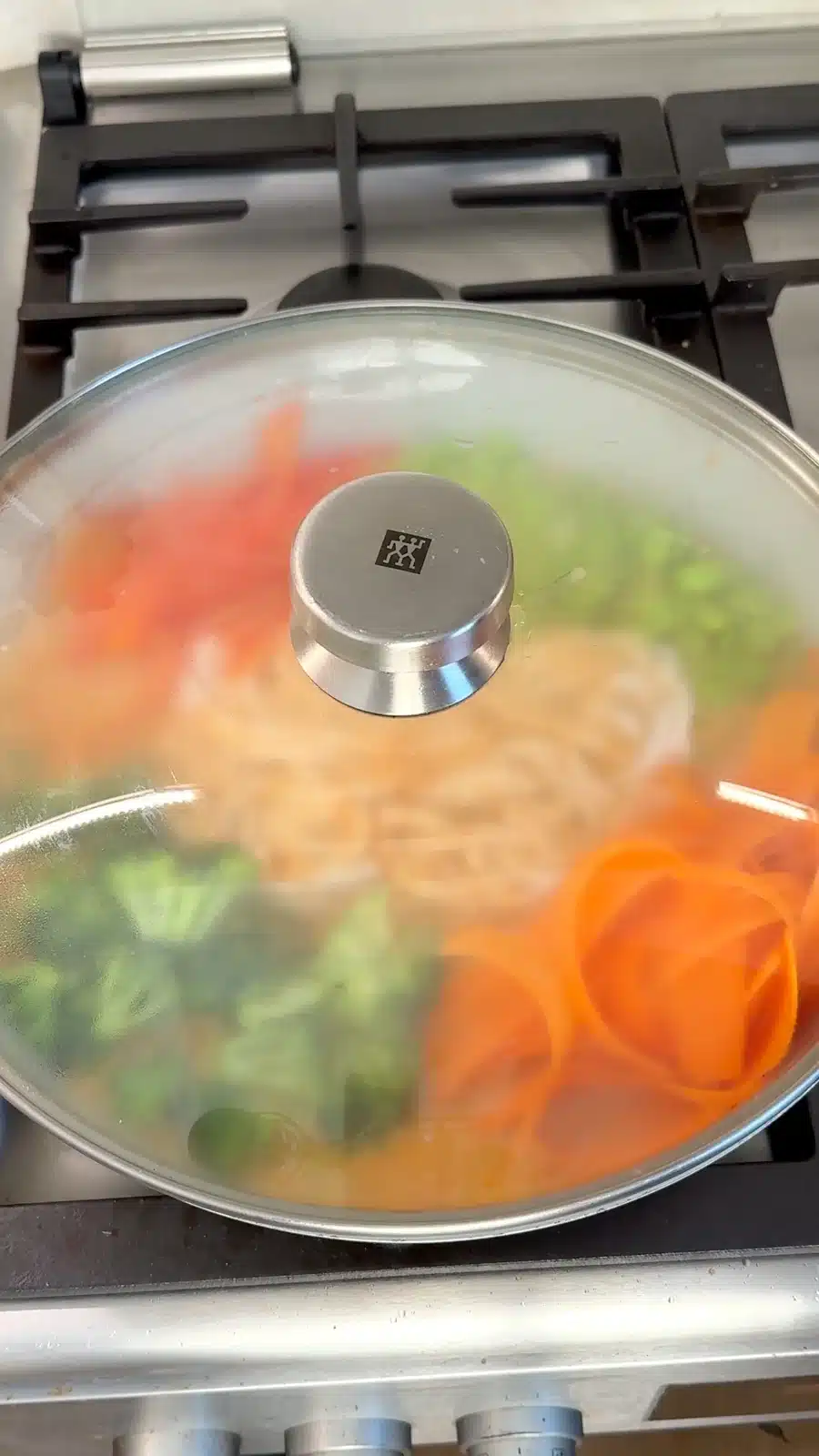
Arrange the noodles and vegetables, pour over the sauce, then cover and cook. Full measurements and cooking times are in the recipe card below.
Tips for the Best Texture
- Keep the heat gentle. Coconut milk and peanut butter make a thick sauce that can catch on the bottom. Stir once the noodles have softened, and add water a little at a time if needed.
- Let frozen noodles soften before pulling them apart. Forcing a solid block apart can break the strands. Give them a little more time under the lid if they resist.
- Check the vegetables, not just the clock. Broccoli should be tender enough for your taste, and frozen edamame must cook for the time on its package. Larger florets or a crowded pan take longer.
Swaps and Variations
- Milder bowls: Use less curry paste and skip the chili oil. Check that your paste is vegan.
- Lighter sauce: Light coconut milk works, but gives a thinner sauce. Start with less added water and adjust during cooking.
- Different vegetables: Try thinly sliced zucchini or snap peas. Keep the pieces small and cook until tender.
How To Serve It
Divide between bowls while the sauce is loose and creamy. Add spring onions and sesame, with vegan chili oil and lime on the side so everyone can adjust their bowl. For a cooler noodle dish on another day, try my Thai peanut noodle salad.
Frequently Asked Questions
Which udon noodles should I use?
Use frozen precooked udon. Blocks vary in weight, so check the package. Let them soften in the sauce before gently separating the strands.
Can I use dried noodles?
Dried noodles are not a direct substitute. They need different amounts of liquid and cooking time. Cook them separately according to the package, then combine with cooked vegetables and sauce, adjusting the water as needed.
Why is my sauce too thick?
Peanut butter thickens the sauce, and it thickens further as it stands. Add water a little at a time and toss gently over low heat until it coats the noodles.
Why are the vegetables still firm?
Large florets and thick slices take longer. Keep broccoli pieces small, use carrot ribbons and slice the pepper thinly. Add water if needed, cover again and cook until tender. Follow the edamame package cooking time.
Is this gluten free?
Standard udon contains wheat, and regular soy sauce usually does too. A gluten free version needs different noodles and tamari, with liquid and cooking time adjusted for those noodles. Check the curry paste label too.
Can I prepare it ahead?
You can slice the vegetables and whisk the sauce ahead, storing them separately in the refrigerator. Cook the noodles just before serving for the best texture.
Storing and Reheating
These noodles are best freshly cooked, when the vegetables still have some bite. Refrigerate leftovers promptly in a covered container and use within 3 days. Reheat until hot throughout with a splash of water, stirring gently as the sauce loosens.
More Noodle Recipes
For a silky sauce made with tofu, try my creamy udon noodles. If you want a bowl with more broth, make the Thai peanut noodle soup. My spicy peanut noodles are another option for a rich peanut sauce with chili and garlic.
One Pot Coconut Curry Noodles
Ingredients
Method
- Peel the carrot into thin ribbons. Cut the broccoli into small florets, about 2 cm, and slice any stems thinly. Slice the bell pepper into thin strips so the vegetables cook quickly.
- Whisk the peanut butter and curry paste with a little coconut milk until smooth. Whisk in the remaining coconut milk, soy sauce and 100 ml water. Start with 1 tablespoon of curry paste if your brand is concentrated or very spicy.
- Place the frozen udon blocks in a wide, deep pan, about 28 to 30 cm, with a lid. Arrange the carrot, broccoli, bell pepper and edamame around them. Pour over the sauce, letting some run underneath the noodles.
- Heat over medium heat until the sauce bubbles gently around the edges. Reduce to medium low, cover and cook for about 5 minutes. Uncover and gently loosen the softened noodles with tongs. Do not force apart noodles that are still frozen.
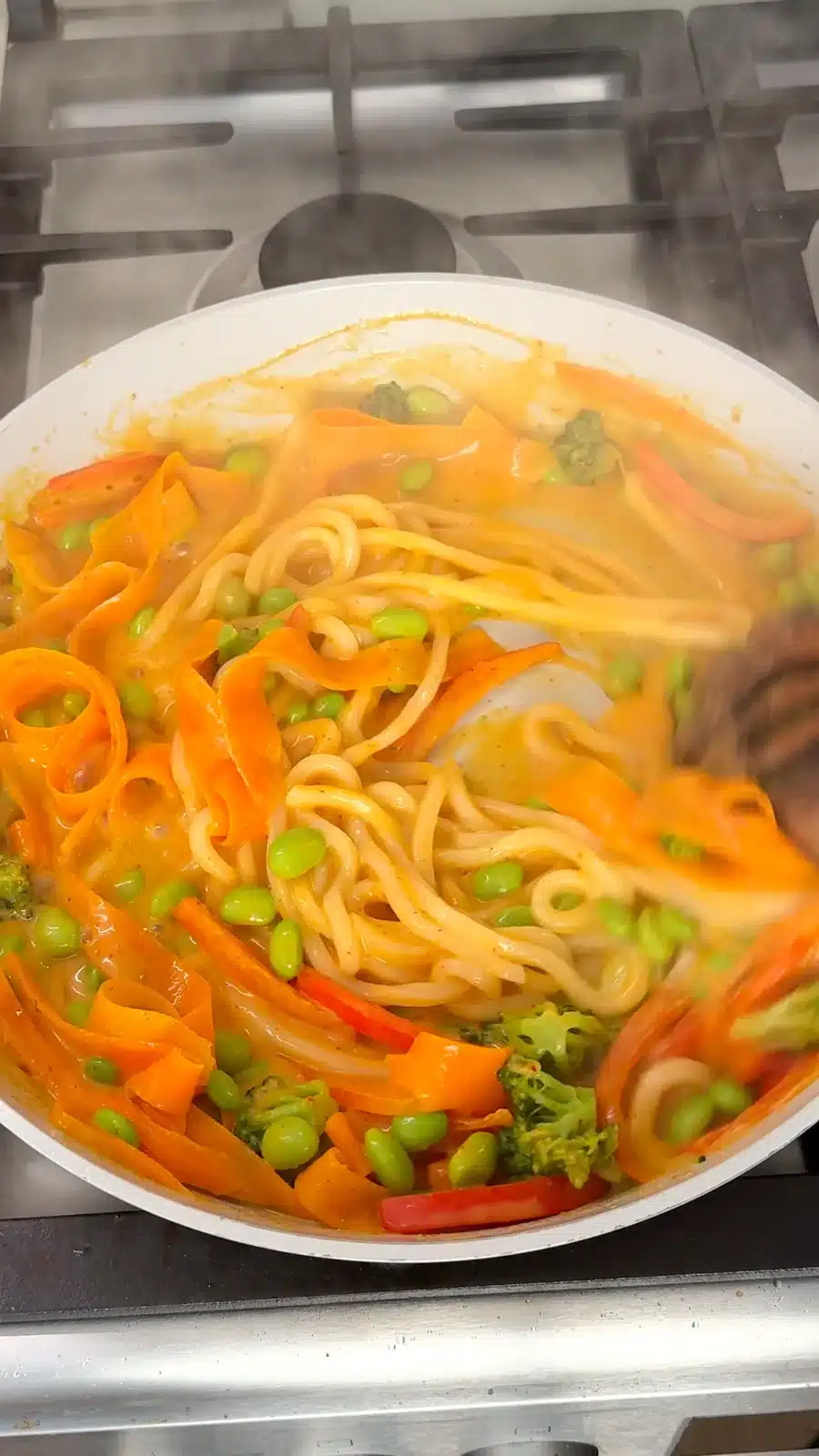
- Stir the vegetables through the noodles, cover and cook for another 3 to 5 minutes, stirring once or twice to prevent sticking. The noodles should be hot throughout and the broccoli tender. Make sure the edamame has cooked for the time stated on its package. Add a splash of water if the sauce thickens before everything is cooked.
- If needed, simmer uncovered for 1 to 2 minutes to thicken the sauce. Taste and adjust the soy sauce or spice. Divide between 3 bowls and finish with spring onions and sesame seeds. Add vegan chili oil and a squeeze of lime if you like. Serve right away, as the sauce thickens as it stands.
Nutrition
Notes
Tried this recipe?
Let us know how it was!THE DR. VEGAN COOKBOOK COLLECTION
Your next favourite dinner is in here
Explore seven digital cookbooks with 200+ plant-based recipes, from quick dinners to comfort food.
Making that going to eat that.
delicious recipe we loved it