

Garlic Confit Pasta

Garlic confit pasta turns slow-cooked garlic into a creamy coating for hot spaghetti. The cloves become soft and mellow, then mash into vegan butter, Parmesan, parsley, thyme and oregano. A little starchy pasta water brings everything together without cream.
You can cook the garlic in the oven or in a small pot on the stove. Give it time to soften, then boil the pasta while you mix the garlic butter. For a quicker garlic dinner using sliced cloves, try my spaghetti aglio e olio.
Table of Contents
Why It Works
Garlic confit means cooking peeled cloves slowly in oil. Here, the softened garlic becomes part of the sauce itself, giving every strand flavor rather than leaving scattered pieces in the bowl.
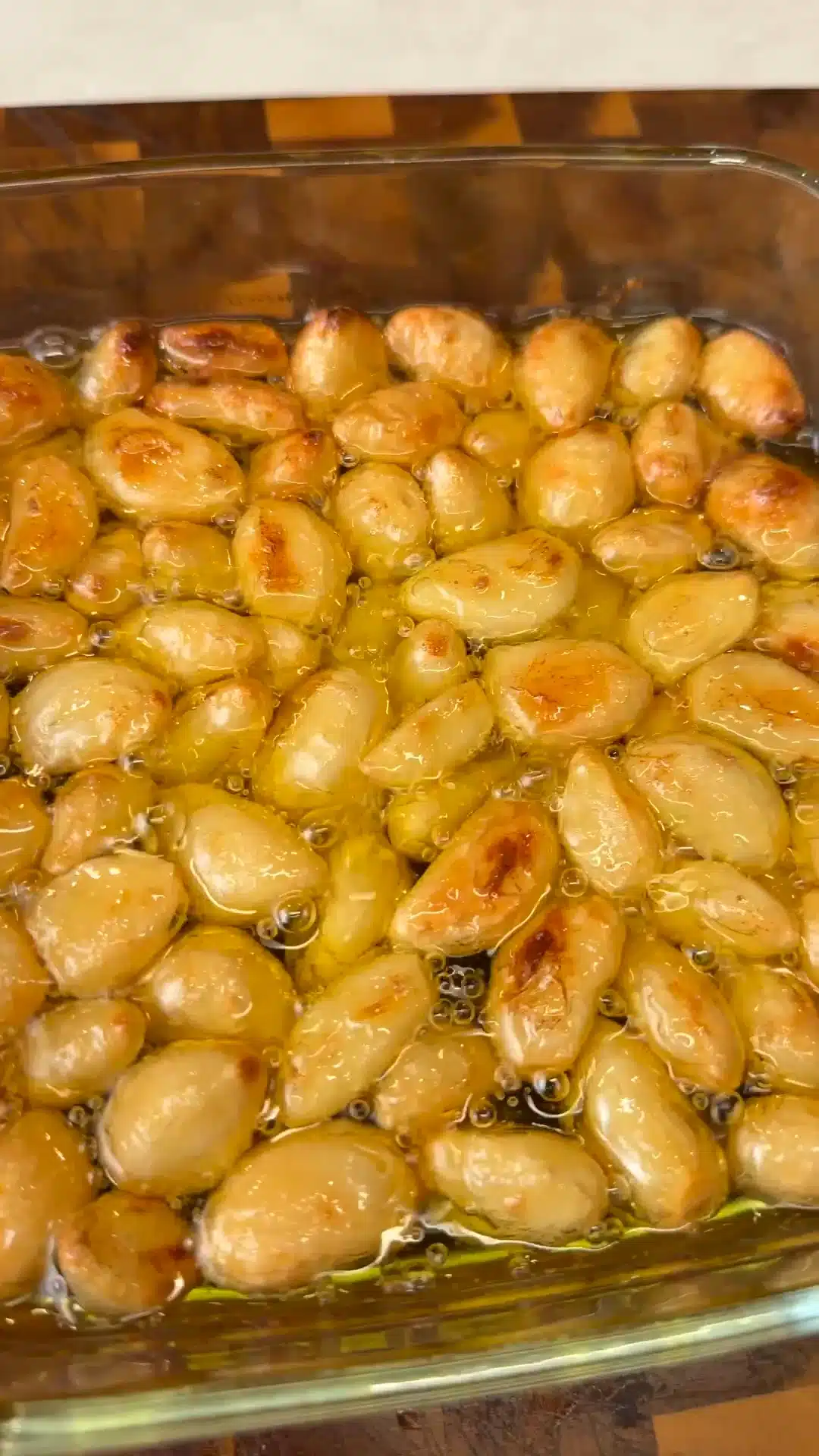
- Mellow garlic: Gentle cooking softens the cloves and takes away their raw sharpness. They should crush easily with a fork.
- Creaminess without cream: Mashed garlic, softened vegan butter and starchy cooking water make a sauce that clings to the pasta.
- Freshness at the finish: Parsley, thyme and oregano go into the garlic butter after the cloves are cooked, so their flavor stays distinct.
How to Make Garlic Confit Pasta
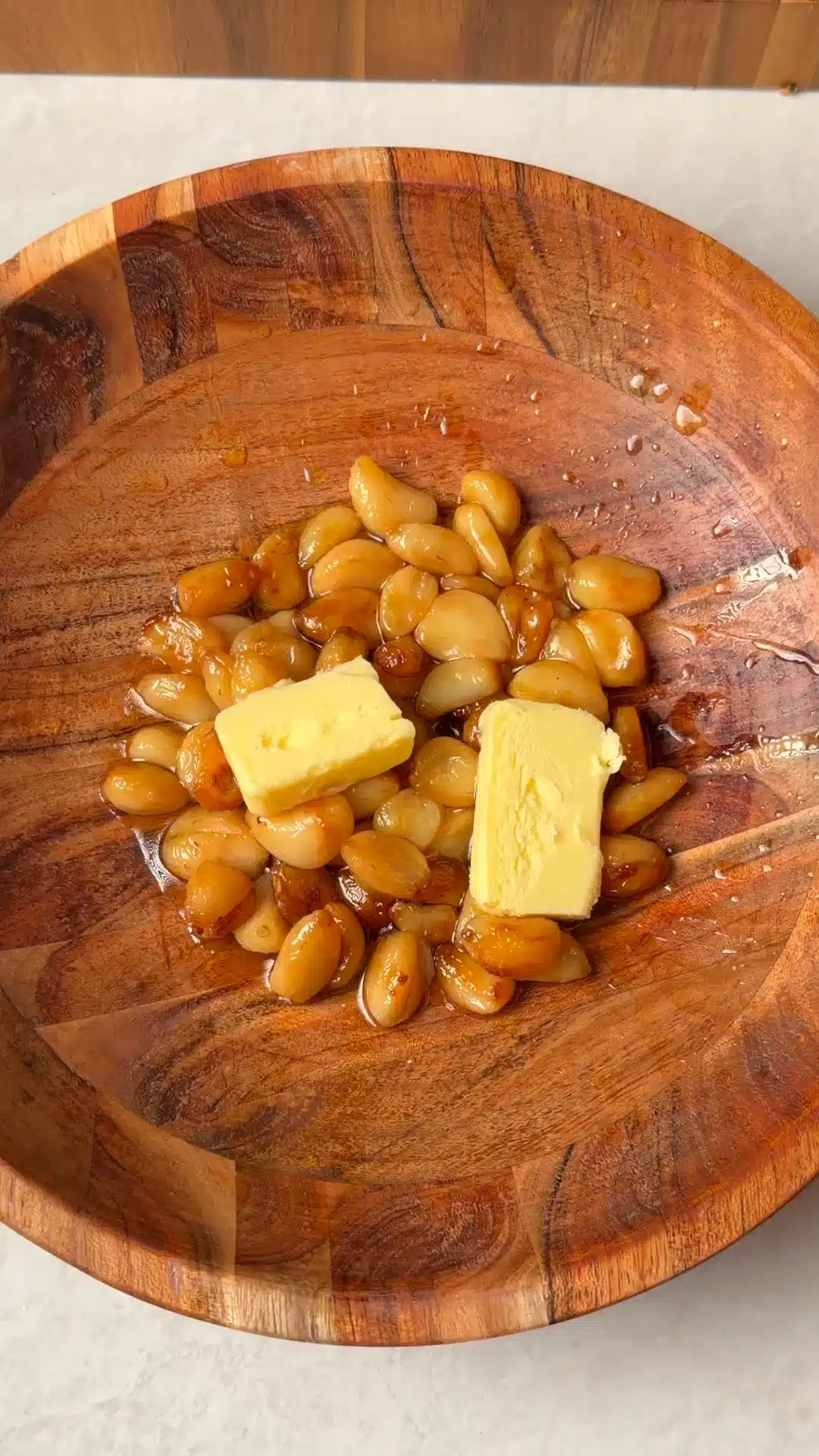
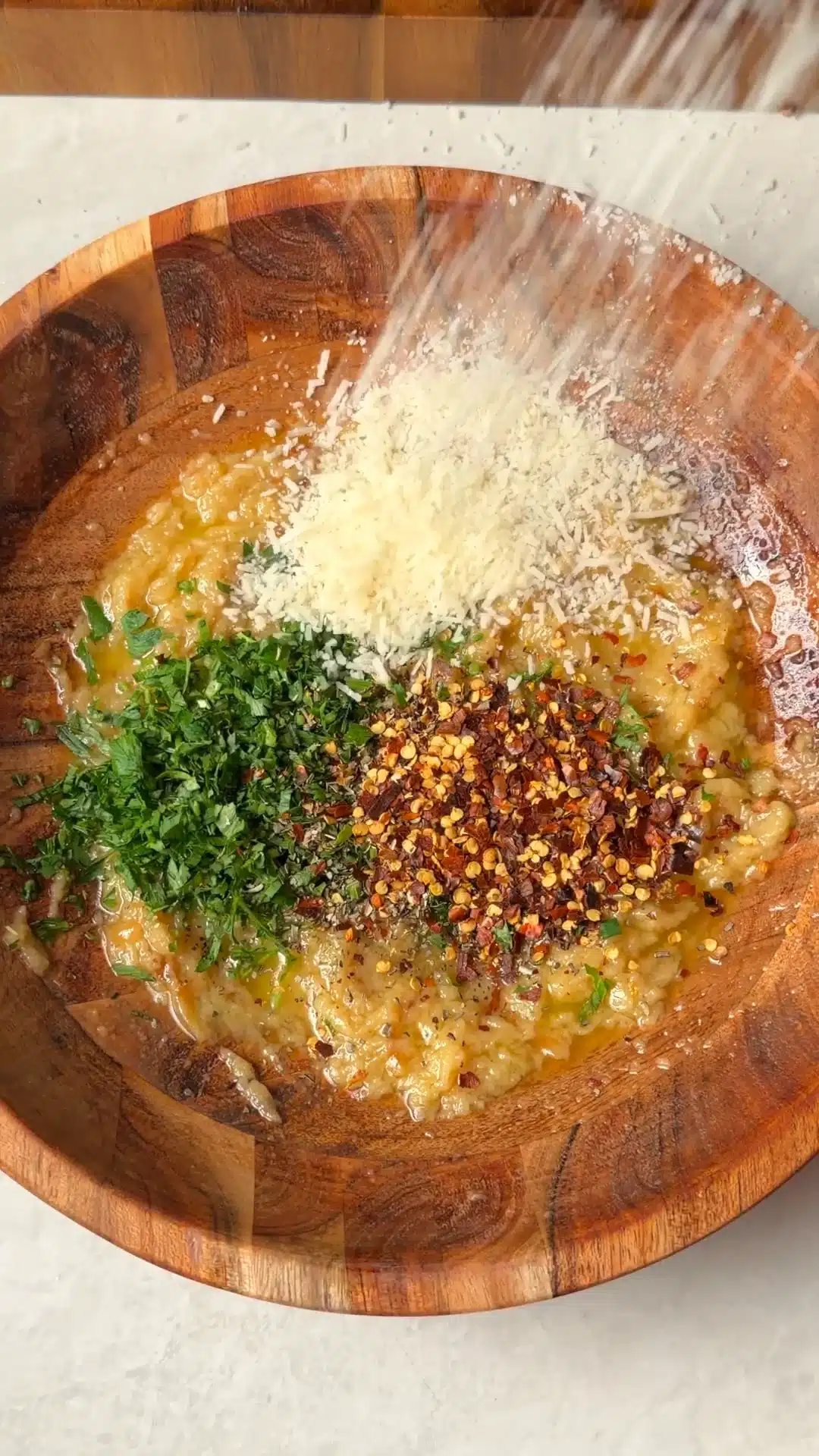
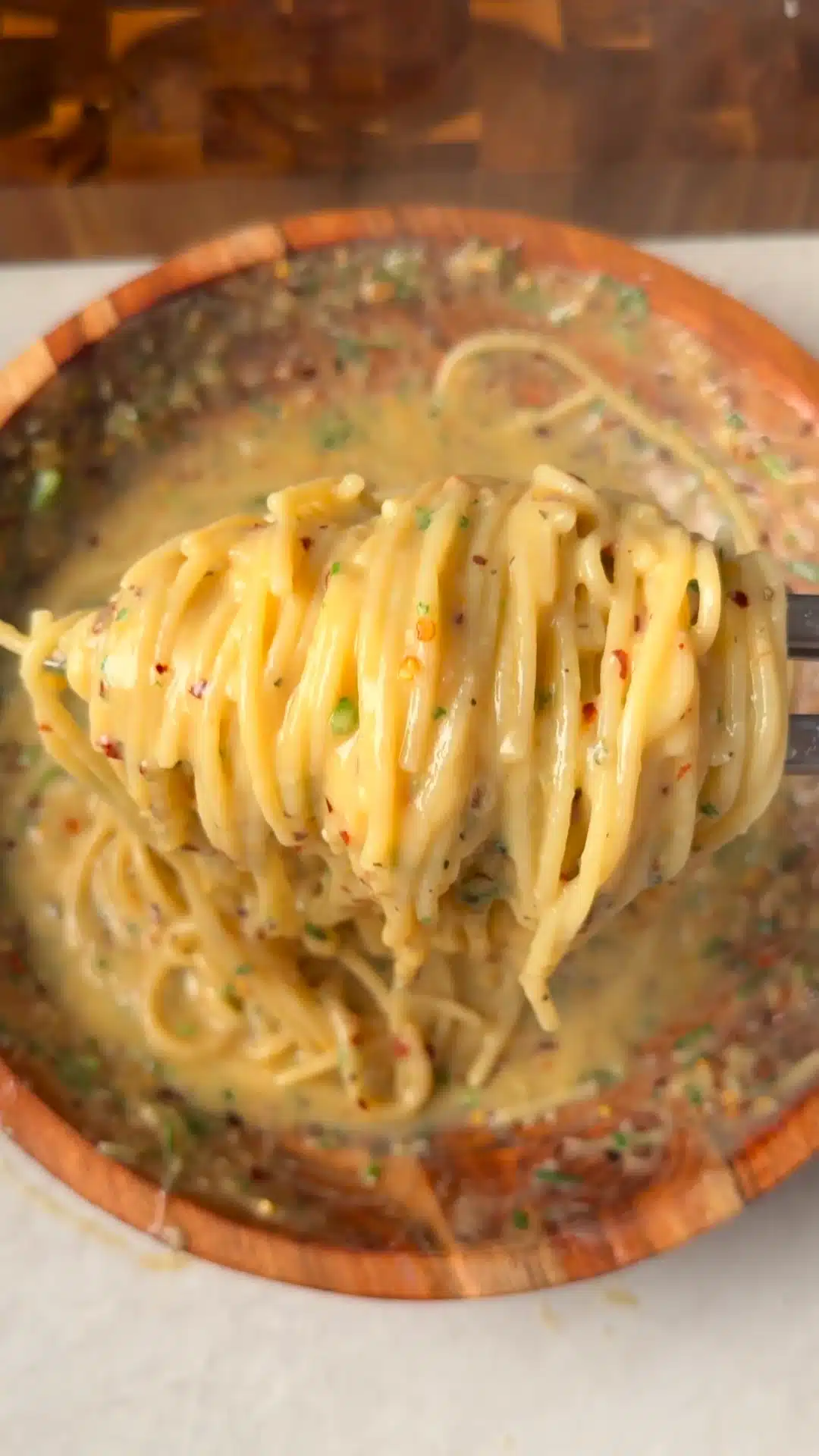
Start with the garlic and wait until it is almost mashable before cooking the spaghetti. Drain the cloves from their oil, then mix and toss while the pasta is still hot. Find the full quantities, oven and stovetop timings in the recipe card.
Tips for a Silky Sauce
- Use a snug dish or pot: The cloves should sit close together so the oil covers them without needing a large amount. The oil is for cooking the garlic; only the measured spoonful goes into the pasta.
- Check softness, not just color: A clove should squash without resistance. If it is browning while still firm, lower the heat and keep cooking gently.
- Save the water before draining: Start with ¼ cup (60 ml), then add more a tablespoon at a time while tossing. Stop when the sauce coats the strands; you may not need the whole cup.
- Keep everything warm: Use softened butter and freshly drained pasta. If the mixture cools before it comes together, transfer it to the warm pasta pot and toss over very low heat.
- Grate the vegan Parmesan finely: Brands melt differently, and nut-based versions can leave a little texture. Taste before adding salt because both the butter and cheese may already be salty.
Swaps and Variations
- Pasta shape: Linguine or fettuccine works well, or use a short shape such as rigatoni. Follow its package cooking time and reserve the water.
- Herbs and heat: Chopped basil can replace the parsley. Reduce or leave out the chili flakes for a milder bowl; a little lemon zest at the end adds brightness.
- Vegetables: Fold in baby spinach with the hot pasta, or add separately sautéed mushrooms once their liquid has cooked off. For a complete mushroom-based recipe, try my creamy garlic mushroom pasta.
What to Serve With It
Serve straight away while the sauce is loose and glossy. A crisp green salad with lemon dressing or steamed green beans balances the rich garlic butter. For a sharing dinner, put pull apart garlic bread on the table for soaking up the sauce.
Frequently Asked Questions
Is garlic confit the same as roasted garlic?
Both methods soften garlic and mellow its flavor. Confit cooks peeled cloves submerged in oil; roasted garlic is usually cooked as a whole bulb with a small drizzle of oil. This recipe uses confit, including a spoonful of its flavored oil.
Can I make the garlic confit on the stove?
Yes. Use a small saucepan over the lowest heat, with enough olive oil to cover the cloves. The oil should barely bubble. Stir occasionally and cook until the garlic mashes easily; the recipe card includes both methods.
Can I use raw garlic instead?
Not as a direct swap for the softened cloves. The same amount of raw garlic would be much sharper and would not mash into the butter. If you want a pasta that starts with fresh garlic in the pan, use the aglio e olio recipe instead.
Why does my sauce look oily or split?
First check that you used only the measured spoonful of confit oil. Add a tablespoon of hot pasta water and toss firmly to bring the water and fat together. Keep the heat low; adding more oil will not fix a split sauce.
How do I fix sauce that is too thick or watery?
For a thick sauce, add hot pasta water a tablespoon at a time. For a watery sauce, stop adding liquid and toss in the warm pasta pot over low heat until it coats the strands. Serve promptly because the pasta continues absorbing moisture.
Do I need a blender?
No. Fully softened cloves can be mashed with a fork. Mash them thoroughly before adding the other ingredients; small garlic pieces are fine, but firm chunks need more cooking.
Can I make this gluten-free?
Yes, use gluten-free pasta and check the labels on your vegan butter and Parmesan. Cook the pasta according to its package directions and add its cooking water gradually, since different pastas release different amounts of starch.
Can I prepare the garlic ahead of time?
Yes. Refrigerate the cooked garlic and oil promptly and use within 4 days of preparation, or freeze in small portions. Use that original preparation date when planning leftovers. Homemade garlic in oil must not be stored at room temperature.
Storage and Reheating
Refrigerate leftover pasta promptly in a covered container and use within 3 days. Reheat gently with a splash of water, tossing until hot; the sauce thickens as it cools. Keep any remaining garlic and cooking oil refrigerated at 40°F (4°C) or below for no more than 4 days from preparation, or freeze in small portions. These garlic-in-oil storage limits follow National Center for Home Food Preservation guidance.
More Vegan Pasta Recipes
- Garlic Butter Pasta with tomato paste and basil.
- Cherry Tomato Butter Pasta with roasted tomatoes and garlic.
- Creamy Garlic Mushroom Pasta with mushrooms and spinach.
- Caramelized Onion Pasta with slowly softened onions.
- Spaghetti Aglio e Olio with garlic, olive oil and chili.

Garlic Confit Pasta
Ingredients
Equipment
Method
- Soften the garlic: Put the peeled cloves in a small ovenproof dish and cover with olive oil. Cover with foil and bake at 325°F (160°C; 140°C fan) for 45 to 60 minutes, checking from 40 minutes. For the stovetop, use a small saucepan over very low heat for about 40 to 50 minutes, stirring occasionally. The oil should barely bubble, and the cloves should crush easily. Lift out the cloves with a slotted spoon and measure the garlic oil listed under For the pasta.
- Cook the spaghetti: When the garlic is nearly ready, cook the spaghetti in salted water until al dente, following the package timing. Reserve the amount of cooking water listed in the ingredients before draining.
- Make the garlic butter: In a large bowl, mash the warm cloves with the softened vegan butter and the measured garlic oil. Stir in the vegan Parmesan, parsley, thyme, oregano, chili flakes and black pepper.
- Loosen the sauce: Gradually mix in about one quarter of the reserved hot pasta water until the butter melts and the mixture looks creamy.
- Toss and serve: Immediately add the hot spaghetti and toss well. Add more pasta water a tablespoon at a time until the sauce coats the strands. Taste for salt and serve with extra vegan Parmesan, parsley and chili flakes.
Notes
- Use only the measured oil: The oil covering the cloves is for cooking the garlic. Only the amount listed under For the pasta goes into the sauce.
- For a creamy sauce: Use hot pasta, softened butter and finely grated vegan Parmesan. If the mixture cools, toss in the warm pasta pot over very low heat with a splash of cooking water. Parmesan brands vary in texture and saltiness.
- Measuring: US measures are rounded for everyday cooking. Use the gram weights for the most consistent result, especially for grated vegan Parmesan.
- Storage: Refrigerate cooked garlic and oil promptly at 40°F (4°C) or below; use within 4 days of preparation or freeze. Never store homemade garlic in oil at room temperature. Refrigerate leftover pasta promptly and use within 3 days, accounting for when the garlic was prepared. Reheat gently with a splash of water.
Tried this recipe?
Let us know how it was!THE DR. VEGAN COOKBOOK COLLECTION
More ideas for your next pasta night
Explore seven digital cookbooks with 200+ plant-based recipes, from quick dinners to comfort food. The link opens the official Dr. Vegan cookbook store.
Looks delicious 😋 and it looks so easy to make. Simply, quick and easy steps 🍝😌… I’ll give it a try myself 🤌🏾☺️
Thank you, Evelin! Hope you enjoy the pasta when you give it a try 😊
Loved the Paprika. Spicy is nicey🤩
So glad you enjoyed that paprika kick, Adele! Thank you 😊
The best
Thank you, Mustapha! 😊