

What’s in Season in October? 25 Foods + Vegan Recipes

October seasonal produce is a good excuse to turn on the oven: squash with caramelized edges, tender cauliflower, and sweet potatoes that split open under a fork. Add crisp apples, juicy pears and a handful of pomegranate seeds, and even a simple dinner starts to feel like fall.
This is a U.S.-focused fall shopping guide. Harvest dates depend on where you live and the weather that year. Figs and eggplant can be late-season finds in warmer areas; fresh dates and pomegranates come from particular growing regions. Check your state in the Seasonal Food Guide for a local picture.
Your October seasonal produce guide
Use this as inspiration for your next grocery trip. Pick a few ingredients you know you will cook, then add one seasonal fruit or vegetable you are curious about.
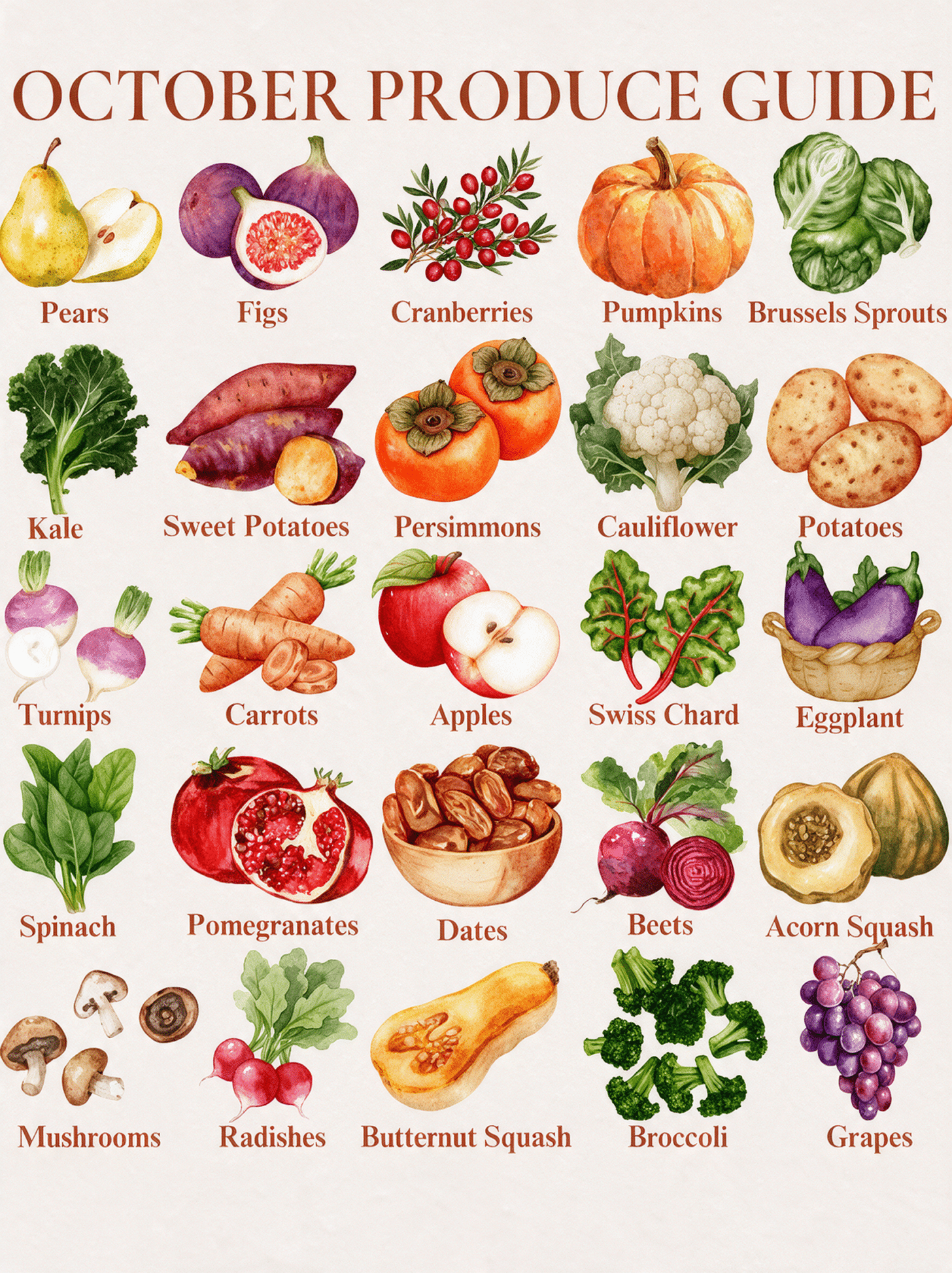
Fruit to look for in October
Apples
Choose firm apples without soft bruises. Eat crisp varieties with nut butter, shave them into a cabbage salad, or cook chopped apples with cinnamon for an easy oatmeal topping.
Pears
Choose firm pears if you want them to last a little longer. Let European varieties soften at room temperature, then refrigerate when ripe. Slice into salads or serve over plain soy yogurt with walnuts.
Cranberries
Fresh cranberries are tart, so think of them as an ingredient rather than a sweet snack. Simmer with orange juice and a little sweetener, then spoon the compote over oats or use it beside roasted squash.
Grapes
Look for plump fruit attached to its stems. Enjoy them fresh, or roast a small bunch until the skins wrinkle and the juices collect, then serve with toasted bread and a creamy white bean spread.
Pomegranates
The juicy arils add a bright, tart crunch to grain bowls and salads. Choose a fruit that feels heavy for its size. Scatter the seeds over roasted cauliflower or a bowl of hummus just before serving.
Persimmons
Check the variety before taking a bite. Squat Fuyu persimmons can be eaten firm; pointed Hachiya persimmons need to become completely soft. Slice Fuyu into salads or spoon soft Hachiya flesh into oats.
Figs
October figs are a late-season treat where the climate allows. Choose tender fruit without mold and use it promptly. Halve over toast with almond butter, or tuck into a salad with peppery greens.
Dates
Fresh dates are a fall harvest in date-growing regions, while the soft packaged dates in most stores are available year-round. Pit and chop them into oatmeal, or fill them with tahini for a sweet snack.
The University of California’s persimmon guide explains the Fuyu and Hachiya distinction. Waiting for a Hachiya to soften makes a big difference to how it tastes.
Fall vegetables worth bringing home
Squash and the hearty basics
Pumpkins
Choose a pumpkin sold for cooking, such as a sugar or pie pumpkin. Roast the flesh for soup, mash it into a pasta sauce, or use grated pumpkin in savory flatbread.
Butternut squash
Look for firm skin and a squash that feels substantial for its size. Roast cubes for grain bowls or cook until tender and blend into soup. A sharp knife and a stable cutting board make prep easier.
Acorn squash
Its small size makes it useful for stuffing. Roast the halves until tender, then fill with lentils, sautéed mushrooms and herbs. Add lemon or a spoonful of tahini sauce to finish.
Sweet potatoes
Choose firm roots without soft spots. Bake whole for a low-effort dinner, or cut into similar-size wedges so they cook evenly. Pair their sweetness with chickpeas, greens and a tangy dressing.
Potatoes
Potatoes are a fall harvest and a year-round storage staple. Choose firm potatoes without green patches or heavy sprouting. Roast for crisp edges, mash with olive oil, or add to soup for body.
Crunchy roots and tender greens
Carrots
Look for firm roots. Roast with cumin, grate into slaw, or blend cooked carrots into a creamy sauce. Large carrots and small carrots both work; even pieces matter more than a perfect shape.
Beets
Choose firm beets and remove leafy tops for storage. Roast until tender, then pair with lentils and a mustard dressing. Fresh, unwilted beet greens can be cooked separately like other leafy greens.
Turnips
Smaller turnips are a useful choice when you want a milder flavor. Roast in wedges or mash with potatoes. Turnips and rutabagas are different vegetables, even though some recipes use similar names.
Radishes
Slice raw radishes for peppery crunch in sandwiches and salads. Roasting softens their bite. If they come with greens, remove the tops before storing the roots.
Kale
Choose crisp leaves with no slimy patches. Remove tough stems, then sauté or stir into bean soup. For a raw salad, finely shred the leaves and massage with a little dressing.
Spinach
Use tender leaves in sandwiches and salads, or stir a handful into hot pasta just before serving. Spinach cooks down quickly, so it is an easy addition when a meal needs more greens.
Swiss chard
The colorful stems and leafy tops cook at different speeds. Chop and sauté the stems first, then add the leaves. Finish with garlic and lemon and serve beside beans or roasted potatoes.
Roasting-tray favorites
Broccoli
Look for compact florets with fresh green color. Roast until the edges brown, or add to pasta. Peel the tough outer layer from the stalk and slice the tender center instead of throwing it away.
Cauliflower
Choose a firm head with tightly packed florets. Roast thick slices for a centerpiece, or use florets in soup. Pieces that break off when slicing are perfect for roasting alongside the larger steaks.
Brussels sprouts
Choose firm sprouts with tight leaves. Halve, dry well and roast cut-side down with space between them. Crowding the tray traps steam and makes it harder to get browned edges.
Eggplant
A late-season option in warmer regions, rather than a reliable October crop everywhere. Choose glossy skin and firm flesh, then roast until the center is soft. It works well in dips, stews and pasta sauces.
Mushrooms
Cultivated mushrooms are available year-round, but suit fall cooking beautifully. Choose firm mushrooms without sliminess. Brown in a roomy pan before adding sauce, so they develop flavor instead of sitting in released liquid.
Store your haul so you actually get to eat it
A little sorting when you get home helps keep fragile produce visible and gives sturdier ingredients the right conditions.
Save more of your shop
Three places to put your produce
Leafy greens, broccoli, cauliflower, Brussels sprouts, carrots, beets, radishes, grapes and mushrooms. Refrigerate ripe figs and cut produce too.
Whole pumpkins and winter squash. Give them airflow and keep them away from heat. A hot kitchen counter is not a cool storage spot.
Firm European pears can ripen at room temperature. Move them to the fridge once ready to eat. Keep a ripe-fruit bowl small enough to finish.
Use delicate greens, ripe figs and mushrooms early in the week. Save sound, whole winter squash for later. These storage habits draw on University of Minnesota Extension guidance; how long produce lasts still depends on its condition when you buy it.
Keep perishable produce refrigerated at 40°F / 4°C or below. Rinse under running water before preparing it, including skins you plan to cut through. Plain water is enough; skip soap. See the FDA’s produce-handling guidance.
Vegan recipes to cook with your October produce
These recipes turn a seasonal shopping list into dinner. Start with the ingredient you already have, then open the full recipe for quantities and instructions.

Roasted Butternut Squash Soup
Use your: butternut squash and carrots.
Roasted vegetables, garlic and coconut milk make a silky soup. Serve with bread and add white beans using the variation in the recipe if you want a more substantial bowl.
Make the squash soup →Loaded Baked Sweet Potatoes
Use your: sweet potatoes and spinach.
Sweet potato, roasted chickpeas, spinach and tahini sauce bring soft, crisp and creamy textures into one dinner. The toppings do the work, so you can keep the rest of the meal simple.
Make the loaded sweet potatoes →Cauliflower Steaks with Chimichurri
Use your: cauliflower.
Roasted cauliflower gets a red pepper and walnut sauce plus a bright herb dressing. Serve with lentils or chickpeas and a grain for a filling plate.
Make the cauliflower steaks →Creamy Mushroom Pasta
Use your: mushrooms.
A creamy oat-based sauce makes this a comforting way to use a punnet of mushrooms. Add a green side salad or serve cooked seasonal greens alongside.
Make the mushroom pasta →A simple way to build a fall meal
You do not need a separate recipe for every vegetable. Choose a seasonal base, add a protein-rich plant food, then finish with something that brings contrast.
From produce to dinner
Pick, pair, finish
Butternut squash + chickpeas + brown rice + lemon-tahini sauce + pumpkin seeds.
Roasted beets + lentils + kale + apple slices + mustard dressing + walnuts.
Baked potato + smoky tofu + sautéed chard + tahini sauce + sliced radishes.
For a manageable first shop: choose one squash or root vegetable, one green vegetable and two fruits. Add a tin of beans, a grain and a sauce you like. That gives you several starting points without a fridge full of ambitious plans.
What makes this a nourishing way to eat?
Variety is the useful part. Vegetables contribute fiber, potassium, folate and vitamins A and C in different amounts. Pairing produce with beans, lentils, tofu, nuts or seeds helps turn it into a more rounded meal. The USDA vegetable guide explains these nutrients and the value of eating a range of vegetables.
Seasonal shopping can make trying that variety more appealing. It does not mean you have to buy everything fresh or local. Frozen vegetables and canned ingredients can still make everyday cooking easier, especially when the fresh option is expensive or you will not use it in time.
October produce questions
Are all these foods in season everywhere in October?
No. This guide is aimed at U.S. fall shopping, and regions differ. Figs, dates, pomegranates and eggplant need particular climate or harvest conditions. Cultivated mushrooms and stored potatoes are available well beyond their seasonal associations. A local market or state-specific calendar will give you a better answer for your area.
What if I am in the UK, Dubai or Australia?
Use the food and cooking ideas, but check a local harvest calendar. The UK shares many familiar fall crops with parts of the U.S.; Dubai has a different growing season and many imported foods. October is spring in Australia, so an American fall chart is not a local seasonal guide there.
Is seasonal produce always cheaper or more nutritious?
Not automatically. Local abundance can lower prices, but weather, transport and store pricing also matter. Freshness, variety, storage and cooking all affect food quality. Choose produce you enjoy, can afford and will use.
Can I use canned pumpkin instead of fresh?
Plain canned pumpkin is useful in recipes written for pumpkin purée, including many soups and sauces. Check that it is pumpkin rather than sweetened pie filling. It will not replace fresh pumpkin cubes or grated squash in every recipe.
Which recipe should I start with?
Try the roasted butternut squash soup for a cozy batch-cooking project, or the loaded sweet potatoes if you want an easy dinner with chickpeas and greens.
Sources and seasonal notes
Seasonal availability: FoodPrint’s Seasonal Food Guide, which lets you select a U.S. state and time of year. The graphic is a broad fall shopping reference, not a universal local-harvest calendar.
Persimmon varieties and ripeness: University of California Agriculture and Natural Resources. Produce storage: University of Minnesota Extension. Handling and refrigeration: FDA. Vegetable nutrition: USDA MyPlate.
Seasonality and linked recipes checked October 2026.