

6 Heart-Healthy Plant-Based Foods + Easy Meal Ideas

Oats for breakfast, chickpeas in a lemony salad, walnuts scattered over roasted vegetables. Heart-healthy plant-based foods can be ordinary ingredients that make everyday meals more satisfying.
This article takes the six foods in the illustration below and turns them into practical meal ideas. You’ll find what each food contributes, simple ways to use it, and recipes from the blog to help you get started.
The bigger picture matters: the American Heart Association’s dietary guidance emphasises a varied eating pattern with vegetables, fruit, whole grains, legumes, nuts and unsaturated fats. These six foods are useful examples, not a complete diet or a list you need to eat every day.
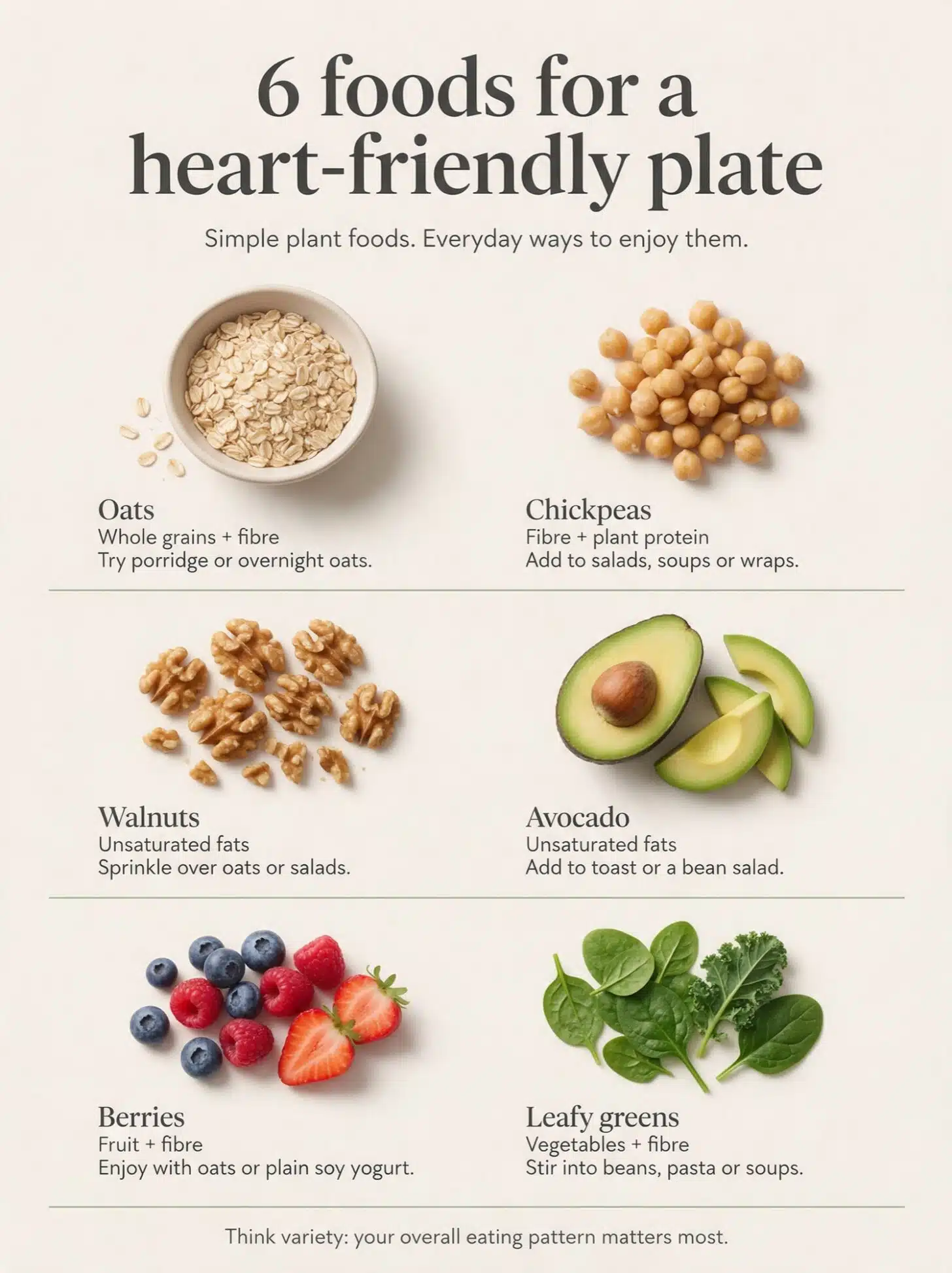
1. Oats: whole grains and soluble fibre
Oats contain beta-glucan, a type of soluble fibre. Research supports its ability to help lower LDL cholesterol when eaten regularly in sufficient amounts. The benefit comes from making them part of a regular eating pattern. Read the oat-fibre research.
Plain rolled, quick or steel-cut oats all give you a useful whole-grain starting point. Choose whichever texture and cooking time you prefer; look at added sugar when buying flavoured sachets.
Try this: Cook oats with an unsweetened, fortified plant milk, then add berries, cinnamon and chopped walnuts. Or make overnight oats and keep the toppings separate until you’re ready to eat.
Prefer savoury? My Crispy Lentil Veggie Patties Sandwich includes oat flour as an alternative to breadcrumbs. Use that option for another way to cook with oats.
2. Chickpeas: fibre and plant protein
Chickpeas bring both fibre and protein to a meal. Like other legumes, they can help you build meals around plant protein. The American Heart Association recommends beans and legumes as part of a healthy eating pattern.
Canned chickpeas make this especially easy. Choose no-added-salt or lower-sodium versions where available, then drain and rinse. Use them straight in a salad, mash them for a sandwich filling, or roast them with smoked paprika.
Cook this: My Balela Salad combines chickpeas, chopped vegetables, herbs and walnuts. Serve it with wholegrain pita or spoon it over brown rice. If you’re watching added sugar, choose pomegranate molasses without added sugar and use a small drizzle.
3. Walnuts: crunch and unsaturated fats
Walnuts supply unsaturated fats and the plant omega-3 fat ALA. ALA is different from the EPA and DHA found in fish and algae, and the body converts only small amounts of ALA into those other forms. NIH explains the different omega-3 fats here.
For heart health, the swap matters. Replacing some foods high in saturated fat with foods containing unsaturated fats can help lower LDL cholesterol. For example, try chopped walnuts on a salad in place of a topping high in saturated fat. Read the AHA guidance on dietary fats.
Try this: Scatter a small handful of unsalted walnuts over oats, salads or roasted vegetables. Chop them roughly so you get a little crunch in each bite.
Cook this: The roasted pepper sauce in my Cauliflower Steaks with Roasted Red Pepper Sauce and Chimichurri includes walnuts. Add beans and a whole grain alongside to make a more substantial meal.
4. Avocado: a creamy source of unsaturated fat
Avocado is another way to bring unsaturated fats into plant-based meals. Use its creamy texture in place of a spread that is high in saturated fat, such as a coconut-oil-based vegan butter. Choose the amount that works with the rest of your meal. NHLBI’s heart-healthy food guidance includes avocado among sources of unsaturated fat.
Try this: Mash avocado with lemon juice and black pepper, then spread it on wholegrain toast with chickpeas and sliced tomato. For lunch, add a few slices to a bean salad or grain bowl.
You can also spoon some Balela Salad over avocado toast. That is a serving suggestion for the salad, rather than an ingredient in the original recipe.
5. Berries: fruit, fibre and an easy breakfast topping
Strawberries, raspberries and blueberries bring fruit and fibre to your plate. Their sweet, sharp flavour makes them an easy way to add more fruit to breakfast or a snack. Fruit is a core part of the DASH eating pattern, which was developed to support healthy blood pressure.
Try this: Add fresh berries to oats or plain soy yogurt. Frozen berries are practical for porridge and sauces; prepare them according to the packet instructions, including heating if directed.
For an easy topping, warm berries in a small saucepan with a splash of water until juicy. Spoon over porridge and finish with walnuts. The warm fruit, creamy oats and crunchy walnuts work well together.
6. Leafy greens: a useful everyday vegetable
Spinach, kale and other leafy greens add vegetable variety, fibre and nutrients to meals. Vegetables are central to heart-friendly eating patterns such as DASH. Keeping a bag ready in the fridge or freezer makes it easier to include vegetables in everyday cooking. See how vegetables fit into DASH.
Try this: Stir spinach into a bean stew near the end of cooking, toss kale through pasta, or put a handful of greens underneath a chickpea salad. Frozen greens are useful when you need something you can keep on hand.
Cook this: My Loaded Baked Sweet Potatoes include baby spinach and chickpeas. For a lower-sodium version, reduce the added salt and use fewer olives and sun-dried tomatoes, tasting before adding more seasoning.
Turn the six foods into everyday meals
Several of these ingredients work naturally together. Here are three meals to try:
- Breakfast: Porridge made with unsweetened fortified soy milk, topped with berries and chopped walnuts.
- Lunch: Balela Salad over leafy greens, with wholegrain pita and a few avocado slices.
- Dinner: Loaded Baked Sweet Potatoes with chickpeas and spinach, adjusting salty toppings to suit your needs.
Use these as flexible meal ideas. Adjust portions and add other foods according to your appetite and needs; this is not a personalised or nutritionally complete meal plan.
Small shopping choices that make a difference
A vegan label does not automatically tell you whether a product fits your heart-health goals. Some vegan cheeses, spreads and desserts contain plenty of coconut or palm fat. Compare saturated fat, sodium and added sugar on labels. The AHA explains why saturated fat matters for cholesterol.
- Buy convenient staples: Plain oats, canned chickpeas, unsalted walnuts, frozen berries and frozen greens are useful starting points.
- Build flavour: Try lemon, garlic, herbs, cumin or smoked paprika before reaching for more salt.
- Use what you enjoy: Other beans, nuts, fruit and vegetables can play similar roles. This list is a starting point, not a shopping rule.
Frequently asked questions
Do I need to eat all six foods every day?
No. Aim for variety across your meals and week. Repeating a breakfast you enjoy is fine, and so is swapping chickpeas for lentils or berries for another fruit.
Can these foods lower cholesterol?
A heart-friendly eating pattern can help manage cholesterol. Oat beta-glucan and replacing saturated fats with unsaturated fats are two evidence-based approaches discussed above. The effect varies, and food choices do not replace prescribed treatment.
Are canned and frozen foods okay?
Yes. They can make regular plant-based meals much easier. Compare labels for added salt, sugar and sauces, and follow preparation instructions. Fresh food is not a requirement for every meal.
Is this a complete guide to a vegan diet?
No. This article focuses on six foods for heart-friendly meals. A fully vegan diet also needs attention to overall nutrition, including a reliable source of vitamin B12.
Choose one meal to start with
Try oats with berries tomorrow morning, make a bowl of Balela Salad for lunch, or add greens to tonight’s beans. Choose a meal you already enjoy and make one useful addition or swap. That is a practical way to turn nutrition advice into food you will want to cook again.
This article is for general information. If you are managing high cholesterol, heart disease or a condition that affects your dietary needs, discuss changes with your healthcare professional.